Sunday, December 10, 2006
The Jakarta Post, Jakarta
Jonny Reid of New Zealand's A1 Team snatched the pole position Saturday for Sunday's Sprint race at the Gudang Garam A1GP Sentul, with a last-gasp flying lap in the final minutes of the qualifying session.
Reid's total time was just 0.034 seconds quicker than Great Britain's Robbie Kerr, who also moved up in the last minute to secure second position from Germany's Nico Hlkenberg for Sunday's 15-lap Sprint race.
Reid performed powerfully throughout the four segments, setting top five times in all sessions, but it was his last lap that grabbed pole.
"It's quite hard in today's qualifying due to the weather conditions, but I'm glad to be on the pole position, and looking forward to the race," said Reid.
He now looks to achieve a better result in Sentul than when he competed in Brno, Czech, the last race he started on pole, where he ran into the wall before the first corner after a clash with Hlkenberg.
Meanwhile, Kerr could only post the fifth quickest in the third until a massive push in the final minute moved him into second ahead of Hlkenberg.
"It was an unfortunate situation. I think we both have misjudged the circuit corner but we have been moving on and will be focusing on winning the race tomorrow," Kerr said.
After recording the fastest time in session one, 0.064 seconds quicker than Reid, Hlkenberg looked set to score yet another pole position, however he failed to match the pace in the remaining three 15-minute portions and dropped down to third overall.
Hlkenberg said he had made minor set-up adjustments between sessions, and felt the car was better Saturday.
"Yesterday I actually had a problem, but today, I felt much better and enjoyed the track. For me the weather does not really matter. I like both, the wet and the dry conditions. I'm ready for both conditions."
Mexican Salvador Duran, after setting the fastest time in the morning's earlier practice session, steadily improved his lap times to start the race from fourth position. Duran's combined times were enough to win the position against Phil Giebler of the USA, who posted the fastest time in the third session. Defending champions France will start the race in seventh behind Australia.
Ireland's A1 Team's new racer, Richard Lyons, had an eventful first A1GP qualifying when he ran wide into a tire wall at Turn Three during the second session and caused a red flag period.
He returned to the pits to repair the car and continued in the remaining sessions to start Sunday's Sprint race from 18th on the grid.
Team Indonesia's Ananda Mikola, with an aggregate time of 2.35.519, will start from seventeenth position, after India's Armaan Ebrahim.
The Sprint race is due to start Sunday morning at 11 a.m. with the result determining the grid for the afternoon's 50-lap Feature race, which will be moved back half an hour from the original scheduled time of 3 p.m. in anticipation of rain later in the afternoon. (02)
Monday, December 11, 2006
Ananda wants more than just points in A1 race

Friday, December 08, 2006
The Jakarta Post, Lido, West Java
Weather conditions and quick newcomers are threatening Indonesian driver Ananda Mikola's ambition to reach the podium during the A1 Grand Prix races at the Sentul circuit, south of Jakarta, this weekend.
"I know the circuit better... but it's easy to make a mistake when you push too hard. We set some good lap times here last season so I know I can be up there," Ananda said Thursday.
"Hopefully the spectators will help us. I want to be on the podium, even though the team only expects me to get points."
So far, Indonesia has collected one point from four races and is at the bottom of the standings.
A huge crowd, similar to last season's audience in February, is expected to attend this weekend's extravaganza.
"I hope we will have very good attendance this year because we are better prepared. We have worked closely with the Indonesian government and the organizers to ensure the spectators have more enjoyable experience. Yes, it's a last-minute preparation but more people are aware of this event than last season's," said David Clare, A1GP chief operating officer.
Drivers are facing competition from quick newcomers at the A1GP.
"There are four or five new young stars appearing in the A1 this year. I'm sure more will appear in the future and I think that will be a challenge to established drivers, like Ananda," Clare said.
Malaysian driver Alex Yoong, who won the A1GP Sentul leg in February, said all drivers, including Ananda, would have an equal chance to win.
"He had the toughest time this year, but in Europe last season he was as quick as anybody else. He just needs to stay up for the whole weekend," Yoong said.
"I'm expecting an exciting race here and hopefully we can do as good as what we did here last season."
Malaysia is currently third on the leaderboard with 24 points after Germany, backed by Nico Hulkenberg, with 37 points and Great Britain with 31 points.
One of the newcomers, Ho-Pin Tung of China is hoping for a quick debut.
"Maybe I will suffer a bit. I'm not familiar with the car and the track and I have no experience at all in the race," he said.
Ho-Ping Tung is the newly crowned 2006 German Formula 3 Champion and comes to Sentul after testing a World Series Renault car at the Valencia track in Spain for the Belgian KTR team.
The weekend's action kicks off Friday with a practice session, followed with qualifications rounds on Saturday and the sprint and feature races on Sunday.
President Susilo Bambang Yudhoyono is scheduled to officially open the event. (02)
Monday, December 04, 2006
Foundation grooming Indonesian Einsteins
Monday, December 04, 2006
The Jakarta Post, Jakarta
Inspired by the achievement of its students in international science and math competitions over the past 10 years, a school foundation has launched a special class for gifted high school students for the next academic year.
BPK Penabur, in collaboration with the Surya Institute, will open what is dubbed the Brilliant Class with a specially designed three-year curriculum, with a focus on the sciences and maths at high school, under-graduate and graduate levels.
"From my experience with students who have won prizes in the physics Olympiad, it only takes one year for them to master the materials at the bachelor and master's level. Why should we slow them down?" said Yohanes Surya, the chairman of Surya Institute.
The class, which will be conducted at Gading Serpong Christian High School in Tangerang, only admits students with an IQ of 150 or above, who are well above average or categorized as a genius. The selection of students will start in January 2007.
"About one in every 1,000 people has an IQ of 150 or above and about one in every 11,000 people has an IQ of 160, which is the level of Einstein. It means that Indonesia with its huge population has about 25,000 Einsteins," said Yohanes who is also the chairman of the Indonesian Physics Olympiad Foundation (TOFI).
Yohanes, who used to work with the U.S. Nuclear Physics Center in Virginia, said Indonesia had been left behind in the field of science because the government had not made the most of its people's talents and had not set up the basic conditions that would encourage its scientists to come home after studying abroad.
The class, that aims to prepare students to study in high ranking universities in the U.S., will be taught by a group of experienced university lecturers using a special curriculum focusing on mathematics, physics, biology and chemistry, developed by the Surya Institute.
Yohanes, who met President George W. Bush during his recent visit in Bogor, said the president had endorsed his idea of expanding quotas for outstanding students from Indonesia in American universities.
A total of Rp 2.2 billion (US$241,700) a year is needed for the program while the education of a student costs Rp 100 million annually.
BPK Penabur, which was established 56 years ago, has 120 schools in Jakarta, West Java and Lampung provinces. Some of its students have excelled in national and international science and mathematics competitions. On such student is Jonathan Mailoa who won a gold medal at the International Physics Olympiad in Singapore last year.
Surya Institute established a "super-class" at State High School No.3 in Setiabudi, South Jakarta, in September 2005 in collaboration with the Jakarta Secondary Education Agency, the TOFI and car maker BMW Indonesia.
The institute has also received several applications for a similar project from several other schools including Al Maarif High School in Surabaya.
By working together with more and more school institutions, the Surya Institute hopes to reach its target of sending 200 brilliant students to study at top U.S. universities every year.
"From the financial point of view, this is a high-cost project, but in the long run we hope we can contribute a lot to the human capital in this country," said Yohanes. (02)
The Jakarta Post, Jakarta
Inspired by the achievement of its students in international science and math competitions over the past 10 years, a school foundation has launched a special class for gifted high school students for the next academic year.
BPK Penabur, in collaboration with the Surya Institute, will open what is dubbed the Brilliant Class with a specially designed three-year curriculum, with a focus on the sciences and maths at high school, under-graduate and graduate levels.
"From my experience with students who have won prizes in the physics Olympiad, it only takes one year for them to master the materials at the bachelor and master's level. Why should we slow them down?" said Yohanes Surya, the chairman of Surya Institute.
The class, which will be conducted at Gading Serpong Christian High School in Tangerang, only admits students with an IQ of 150 or above, who are well above average or categorized as a genius. The selection of students will start in January 2007.
"About one in every 1,000 people has an IQ of 150 or above and about one in every 11,000 people has an IQ of 160, which is the level of Einstein. It means that Indonesia with its huge population has about 25,000 Einsteins," said Yohanes who is also the chairman of the Indonesian Physics Olympiad Foundation (TOFI).
Yohanes, who used to work with the U.S. Nuclear Physics Center in Virginia, said Indonesia had been left behind in the field of science because the government had not made the most of its people's talents and had not set up the basic conditions that would encourage its scientists to come home after studying abroad.
The class, that aims to prepare students to study in high ranking universities in the U.S., will be taught by a group of experienced university lecturers using a special curriculum focusing on mathematics, physics, biology and chemistry, developed by the Surya Institute.
Yohanes, who met President George W. Bush during his recent visit in Bogor, said the president had endorsed his idea of expanding quotas for outstanding students from Indonesia in American universities.
A total of Rp 2.2 billion (US$241,700) a year is needed for the program while the education of a student costs Rp 100 million annually.
BPK Penabur, which was established 56 years ago, has 120 schools in Jakarta, West Java and Lampung provinces. Some of its students have excelled in national and international science and mathematics competitions. On such student is Jonathan Mailoa who won a gold medal at the International Physics Olympiad in Singapore last year.
Surya Institute established a "super-class" at State High School No.3 in Setiabudi, South Jakarta, in September 2005 in collaboration with the Jakarta Secondary Education Agency, the TOFI and car maker BMW Indonesia.
The institute has also received several applications for a similar project from several other schools including Al Maarif High School in Surabaya.
By working together with more and more school institutions, the Surya Institute hopes to reach its target of sending 200 brilliant students to study at top U.S. universities every year.
"From the financial point of view, this is a high-cost project, but in the long run we hope we can contribute a lot to the human capital in this country," said Yohanes. (02)
Friday, December 01, 2006
KKP RI-Timor Leste Terbentuk
Deutsche Welle 1, Agustus 2005
Indonesia dan Timor Leste serentak mengumumkan nama 10 anggota Komisi Kebenaran dan Persahabatan, KKP.
Secara serentak, pemerintah Indonesia dan Timor Leste Senin kemarin mengumumkan susunan anggota Komisi Kebenaran dan Persahabatan, KKP, yang resmi terbentuk dan mulai bertugas 1 Agustus 2005. Dalam Keterangan Pers yang dikeluarkan Kementerian Luar Negeri di Jakarta disebutkan, Indonesia akan diwakili oleh 5 anggota, dan Timor Leste juga oleh 5 anggota komisi. Anggota dari Indonesia adalah Ahmad Ali, Wisber Loeis, Benjamin Mangkudilaga, Petrus Turang dan Agus Widjojo. Sedangkan anggota komisi dari Timor Leste adalah Jacinto Alves, Diorinicio Babo, Aniceto Guterres, Felicidade Guterres dan Cirilio Varadles.
Rekomendasi Kejadian di Timor Leste
Kepada wartawan, Juru Bicara Departemen Luar Negeri, Yuri Thamrin mengatakan, para anggota komisi adalah tokoh-tokoh masyarakat yang tidak diragukan lagi kemampuannya dalam menyelesaikan konflik di kedua belah pihak. Yuri mengatakan, KKP nantinya akan mengeluarkan sebuah rekomendasi bagi kedua belah pihak mengenai apa yang sesungguhnya terjadi di Timor Leste tahun 1999. Tapi KKP tidak akan menyebut siapa saja yang bertanggungjawab atas peristiwa pasca jajak pendapat di Timor Leste, juga tidak akan menyebut nama yang sebaiknya diajukan ke persidangan. KKP hanya akan melengkapi laporan Komisi Pencari Fakta yang sudah dibuat sebelumnya, demikian Yuri Thamrin.
Tanggapan Terbentuknya KKP
Banyak pengamat menilai, komisi ini sebenarnya tidak berarti apa-apa dalam upaya mengungkapkan apa yang sebenarnya terjadi selama aksi bumi hangus di Timor-Timur tahun 1999. Mattheos Messakh, seorang jurnalis yang cukup lama mengikuti kasus ini menerangkan, KKP sebenarnya tidak punya mandat apa-apa.
Matheos Messakh: „Komisi ini tidak melakukan investigasi sendiri, mereka hanya memeriksa berkas-berkas dari komisi sebelumnya. Sedangkan komisi ini bisa memberikan amnesti kepada pelaku, walaupun mereka tidak melakukan pengusutan sendiri. Jadi, akhirnya komisi ini hanya akan memberi amnesti kepada para pelaku pelanggaran hak asasi manusia, yang membunuh dan melakukan perusakan. Ini mungkin bukan maksud sebenarnya, tapi ini yang akan dihasilkan, kalau kita lihat mandatnya.
Tapi jurubicara Kementerian Luar Negeri Yuri Thamrin kepada Deutsche Welle menjelaskan, komisi ini tidak dimaksudkan untuk menutup-nutupi masa lalu.
Yuri Thamrin: „Komisi ini akan bekerja dengan kredibel, komisi ini tidak dimaksudkan untuk menutup-nutupi masa lalu. Komisi ini tentu akan bekerja dalam sorotan banyak pihak, tidak hanya masyarakat internasional tapi juga di dalam negeri.“
Gereja Katolik di Timor Leste juga mengeritik pembentukan Komisi Kebenaran dan Persahabatan. Para uskup di Timor Leste menegaskan, para pemimpin politik telah menyangkal hak rakyat Timor Leste untuk meraih keadilan. Gereja Katolik Timor Leste menuntut PBB untuk membentuk pengadilan internasional. Hanya dengan jalan itu, keadilan bagi para korban pelanggaran HAM pada masa jajak pendapat bisa diraih, demikian disebutkan. Juga Selandia Baru menuntut adanya ‚pengadilan yang kredibel’ bagi para pelanggar HAM di Timor Timur. (hp)
Indonesia dan Timor Leste serentak mengumumkan nama 10 anggota Komisi Kebenaran dan Persahabatan, KKP.
Secara serentak, pemerintah Indonesia dan Timor Leste Senin kemarin mengumumkan susunan anggota Komisi Kebenaran dan Persahabatan, KKP, yang resmi terbentuk dan mulai bertugas 1 Agustus 2005. Dalam Keterangan Pers yang dikeluarkan Kementerian Luar Negeri di Jakarta disebutkan, Indonesia akan diwakili oleh 5 anggota, dan Timor Leste juga oleh 5 anggota komisi. Anggota dari Indonesia adalah Ahmad Ali, Wisber Loeis, Benjamin Mangkudilaga, Petrus Turang dan Agus Widjojo. Sedangkan anggota komisi dari Timor Leste adalah Jacinto Alves, Diorinicio Babo, Aniceto Guterres, Felicidade Guterres dan Cirilio Varadles.
Rekomendasi Kejadian di Timor Leste
Kepada wartawan, Juru Bicara Departemen Luar Negeri, Yuri Thamrin mengatakan, para anggota komisi adalah tokoh-tokoh masyarakat yang tidak diragukan lagi kemampuannya dalam menyelesaikan konflik di kedua belah pihak. Yuri mengatakan, KKP nantinya akan mengeluarkan sebuah rekomendasi bagi kedua belah pihak mengenai apa yang sesungguhnya terjadi di Timor Leste tahun 1999. Tapi KKP tidak akan menyebut siapa saja yang bertanggungjawab atas peristiwa pasca jajak pendapat di Timor Leste, juga tidak akan menyebut nama yang sebaiknya diajukan ke persidangan. KKP hanya akan melengkapi laporan Komisi Pencari Fakta yang sudah dibuat sebelumnya, demikian Yuri Thamrin.
Tanggapan Terbentuknya KKP
Banyak pengamat menilai, komisi ini sebenarnya tidak berarti apa-apa dalam upaya mengungkapkan apa yang sebenarnya terjadi selama aksi bumi hangus di Timor-Timur tahun 1999. Mattheos Messakh, seorang jurnalis yang cukup lama mengikuti kasus ini menerangkan, KKP sebenarnya tidak punya mandat apa-apa.
Matheos Messakh: „Komisi ini tidak melakukan investigasi sendiri, mereka hanya memeriksa berkas-berkas dari komisi sebelumnya. Sedangkan komisi ini bisa memberikan amnesti kepada pelaku, walaupun mereka tidak melakukan pengusutan sendiri. Jadi, akhirnya komisi ini hanya akan memberi amnesti kepada para pelaku pelanggaran hak asasi manusia, yang membunuh dan melakukan perusakan. Ini mungkin bukan maksud sebenarnya, tapi ini yang akan dihasilkan, kalau kita lihat mandatnya.
Tapi jurubicara Kementerian Luar Negeri Yuri Thamrin kepada Deutsche Welle menjelaskan, komisi ini tidak dimaksudkan untuk menutup-nutupi masa lalu.
Yuri Thamrin: „Komisi ini akan bekerja dengan kredibel, komisi ini tidak dimaksudkan untuk menutup-nutupi masa lalu. Komisi ini tentu akan bekerja dalam sorotan banyak pihak, tidak hanya masyarakat internasional tapi juga di dalam negeri.“
Gereja Katolik di Timor Leste juga mengeritik pembentukan Komisi Kebenaran dan Persahabatan. Para uskup di Timor Leste menegaskan, para pemimpin politik telah menyangkal hak rakyat Timor Leste untuk meraih keadilan. Gereja Katolik Timor Leste menuntut PBB untuk membentuk pengadilan internasional. Hanya dengan jalan itu, keadilan bagi para korban pelanggaran HAM pada masa jajak pendapat bisa diraih, demikian disebutkan. Juga Selandia Baru menuntut adanya ‚pengadilan yang kredibel’ bagi para pelanggar HAM di Timor Timur. (hp)
Sifon; Persepsi tentang Kekuatan Seks
Jawa Pos, Rabu, 5 April 2006
Bagi kaum laki-laki, sunat adalah hal yang wajar, bahkan malah jadi suatu keharusan. Lalu, ada tradisi yang mengharuskan laki-laki setelah sunat berhubungan intim dengan minimal tiga perempuan yang berbeda secara bertahap. Namanya sifon. Bagaimana prosesi sifon itu?
Tradisi merupakan suatu hal unik yang memperkaya keanekaragaman budaya. Bentuk dan jenis tradisi itu bisa berupa apa saja. Salah satunya adalah sifon. Sifon tak berbeda dengan mitos-mitos lain yang berhubungan dengan fungsi seksual pria. Tradisi tersebut masih banyak dilakukan di Nusa Tenggara Timur. Karena dipercayai berkaitan erat dengan keperkasaan, kejantanan, dan keharmonisan keluarga, tradisi sifon dipegang sangat kuat, baik oleh laki-laki maupun perempuan yang menjadi mitra seksualnya.
Karena itu, banyak perempuan lajang yang mengharuskan calon suaminya disifon sebelum menikah. Banyak pula istri yang mendorong suaminya yang belum disifon untuk menjalani sifon.
Sering laki-laki yang tidak atau belum disifon akan diolok-olok atau disindir, biasanya dilakukan dalam pertemuan-pertemuan komunal. Tetapi, bagaimana sebenarnya tradisi itu dilakukan?
Sifon biasanya dilakukan bertahap dan masing-masing tahap mempunyai makna berbeda-beda. Sebelum melakukan sunat dan sifon, ada tahapan yang disebut naketi, yaitu pengakuan kepada dukun sunat tentang berapa kali seorang laki-laki pernah berhubungan seks sebelum disunat.
Seberapa banyak seorang laki-laki pernah berhubungan seks akan disimbolkan dengan sejumah batu yang dikumpulkan untuk diberikan kepada dukun sunat. Bila terlalu sering berhubungan seks, biasanya cukup disimbolkan dengan batu besar.
Tahap pertama, bertujuan membuang panas, maksudnya adalah membuang bala atau penyakit. Bila tidak menempuh tahap ini, dipercaya akan terjadi musibah. Misalnya, terjangkit penyakit, rumah tangga tidak harmonis, dan anak-anak mudah terserang penyakit.
Caranya adalah dengan melakukan hubungan seks dengan perempuan tua yang sudah berumur atau dengan perempuan yang sudah memiliki banyak anak. Prosesi pembuangan panas itu dilakukan ketika kondisi luka sunat hampir sembuh, yaitu 4-8 hari setelah disunat. Dia harus berhubungan seks untuk memecahkan bengkak luka sunat.
Tahap kedua disebut saeb aof atau menaikkan badan. Pada tahap ini, hubungan seks dipercaya dapat mengembalikan kesegaran tubuh atau mengembalikan darah yang terbuang pada saat sunat. Pada tahap ini, pelaku sifon dianjurkan berhubungan seks dengan perempuan muda atau yang masih lajang.
Selanjutnya adalah tahap ha’ekit atau tahap melicinkan dan menghaluskan. Dalam tahap ini, pelaku tradisi itu percaya bahwa hubungan seks dapat menghaluskan luka-luka atau gelambir luka pada alat kelamin setelah disunat.
Rentan Penyakit Menular
Bila ditelaah lebih lanjut, sebenarnya praktik sunat yang diikuti sifon sangatlah membuka peluang bagi penularan penyakit menular seksual (PMS), terutama bagi perempuan.
Kerentanan perempuan terhadap PMS sebagai praktik sifon itu disebabkan pada umumnya laki-laki yang menjalani sunat telah lebih dari satu kali berhubungan seks dengan perempuan yang sudah terbiasa melakukan hubungan seks (PSK). Apalagi hubungan seksual itu dilakukan ketika alat kelamin dalam keadaan luka atau infeksi sehingga pelaku tradisi tersebut berpotensi terjangkit penyakit menular seksual.
Anggapan yang muncul di masyarakat wilayah itu -sunat dan sifon dapat meningkatkan daya seksual laki-laki- semakin menyuburkan praktik sifon sekaligus mempunyai daya paksa bagi laki-laki untuk melakukannya. Akibatnya, posisi daya tawar perempuan menjadi lemah.
Hal itu memunculkan dominasi kuasa laki-laki yang menempatkan perempuan pada posisi tidak berdaya dan tidak berani menolak tuntutan tradisi sifon. Padahal, selain penularan PMS, perempuan rentan terhadap tindakan diskriminatif dan kekerasan. Tetapi ironisnya, perempuan sendiri menerima hegemoni nilai di balik sifon sebagai sebuah tradisi yang wajib dan tidak bisa ditolak.
Itulah fenomena menarik tradisi sifon yang menggelitik hati seorang Ferderika Tadu Hungu untuk melakukan penelitian ini.
Metode pengumpulan data dilakukan Tadu melalui wawancara mendalam dan FGD (focus group discussion). Informan penelitian dipilih secara snowball terhadap 42 orang perempuan yang berstatus sebagai istri.
Sasaran penelitian Tadu itu dibagi atas empat kelompok, yaitu perempuan yang suaminya belum disifon, perempuan yang menikah dengan laki-laki yang telah sifon sebelum menikah, perempuan yang menikah dengan laki-laki yang melakukan sifon setelah menikah, dan perempuan yang melayani sifon.
Dalam proses pengumpulan data, Tadu dibantu beberapa perempuan lokal. Namun dalam perkembangannya, mereka keberatan karena masalah-masalah seksual masih dianggap tabu selain ada beban psikologis sebagai sesama warga. Juga, saat wawancara, para informan biasanya dikelilingi suami atau saudara laki-laki mereka. Jalan keluarnya, Tadu melakukan pendekatan kepada informan tatkala suami-suami mereka tidak berada di rumah.
Maskulinitas dalam Tradisi Sifon
Dalam praktik sifon itu, peranan dukun sunat cukuplah dominan. Dukun menjadi sarana penyebar informasi mengenai sunat dan sifon. Pada umumnya, dukun sunat adalah orang yang mempunyai pengaruh dan posisi yang dihormati dalam masyarakat atau gereja.
Selain itu, dukun sunat pandai sekali membaca wajah laki-laki yang sudah disunat dan laki-laki yang belum disunat. Mereka mengatakan bahwa laki-laki yang sudah disunat dan melakukan sifon akan terlihat bercahaya, segar, dan mempunyai fisik yang kuat.
Hampir semua informan dalam penelitian ini menyatakan, sifon membuat hubungan seks dengan suami lebih memuaskan karena lebih lama ejakulasinya. Begitu pula sebaliknya, laki-laki yang ejakulasi dini dianggap egois karena tidak dapat memuskan istri dan hanya untuk kepuasan sendiri.
Menurut mereka, hal itu terjadi bukan karena tidak ada kerja sama antara suami-istri untuk kenikmatan seksual, tetapi akibat gesekan dari kulit alat kelamin suami yang mengakibatkan ejakulasi dini.
"…jika berhubungan dengan istrinya, itu akan membuat istrinya puas dan kelihatan cantik," ujar Yu, salah seorang informan.
Pernyataan tersebut menunjukkan bahwa sifon bisa membuat laki-laki kuat dan perkasa dalam hubungan seksual. Di samping itu, semakin sering seorang laki-laki melakukan hubungan seks, mereka dianggap semakin gagah.
Mereka mengangap laki-laki yang impoten bukanlah laki-laki sejati. Sebab, kejantanan dianggap melambangkan kehidupan laki-laki sehingga jika tak lagi berfungsi, orang itu tak berguna lagi dan disamakan dengan perempuan atau banci. Hal tersebut dipengaruhi kepercayaan bahwa laki-laki yang disunat tanpa sifon akan mengalami impotensi.
Meski demikian, lima orang informan menyatakan cukup menikmati hubungan seks tanpa mempermasalahkan suami sifon atau tidak. Temuan menarik lainnya dalam penelitian ini adalah kesediaan dan kesetujuan kaum ibu jika anak laki-lakinya menjalani sifon. Namun, mereka tidak mau j anak perempuannya menjadi sasaran sifon. Mereka jelas-jelas tidak mau nama keluarga tercemar serta agar anak perempuannya tidak mendapatkan penyakit kotor akibat menjadi tempat "buang panas". (yg/ryn)
Bagi kaum laki-laki, sunat adalah hal yang wajar, bahkan malah jadi suatu keharusan. Lalu, ada tradisi yang mengharuskan laki-laki setelah sunat berhubungan intim dengan minimal tiga perempuan yang berbeda secara bertahap. Namanya sifon. Bagaimana prosesi sifon itu?
Tradisi merupakan suatu hal unik yang memperkaya keanekaragaman budaya. Bentuk dan jenis tradisi itu bisa berupa apa saja. Salah satunya adalah sifon. Sifon tak berbeda dengan mitos-mitos lain yang berhubungan dengan fungsi seksual pria. Tradisi tersebut masih banyak dilakukan di Nusa Tenggara Timur. Karena dipercayai berkaitan erat dengan keperkasaan, kejantanan, dan keharmonisan keluarga, tradisi sifon dipegang sangat kuat, baik oleh laki-laki maupun perempuan yang menjadi mitra seksualnya.
Karena itu, banyak perempuan lajang yang mengharuskan calon suaminya disifon sebelum menikah. Banyak pula istri yang mendorong suaminya yang belum disifon untuk menjalani sifon.
Sering laki-laki yang tidak atau belum disifon akan diolok-olok atau disindir, biasanya dilakukan dalam pertemuan-pertemuan komunal. Tetapi, bagaimana sebenarnya tradisi itu dilakukan?
Sifon biasanya dilakukan bertahap dan masing-masing tahap mempunyai makna berbeda-beda. Sebelum melakukan sunat dan sifon, ada tahapan yang disebut naketi, yaitu pengakuan kepada dukun sunat tentang berapa kali seorang laki-laki pernah berhubungan seks sebelum disunat.
Seberapa banyak seorang laki-laki pernah berhubungan seks akan disimbolkan dengan sejumah batu yang dikumpulkan untuk diberikan kepada dukun sunat. Bila terlalu sering berhubungan seks, biasanya cukup disimbolkan dengan batu besar.
Tahap pertama, bertujuan membuang panas, maksudnya adalah membuang bala atau penyakit. Bila tidak menempuh tahap ini, dipercaya akan terjadi musibah. Misalnya, terjangkit penyakit, rumah tangga tidak harmonis, dan anak-anak mudah terserang penyakit.
Caranya adalah dengan melakukan hubungan seks dengan perempuan tua yang sudah berumur atau dengan perempuan yang sudah memiliki banyak anak. Prosesi pembuangan panas itu dilakukan ketika kondisi luka sunat hampir sembuh, yaitu 4-8 hari setelah disunat. Dia harus berhubungan seks untuk memecahkan bengkak luka sunat.
Tahap kedua disebut saeb aof atau menaikkan badan. Pada tahap ini, hubungan seks dipercaya dapat mengembalikan kesegaran tubuh atau mengembalikan darah yang terbuang pada saat sunat. Pada tahap ini, pelaku sifon dianjurkan berhubungan seks dengan perempuan muda atau yang masih lajang.
Selanjutnya adalah tahap ha’ekit atau tahap melicinkan dan menghaluskan. Dalam tahap ini, pelaku tradisi itu percaya bahwa hubungan seks dapat menghaluskan luka-luka atau gelambir luka pada alat kelamin setelah disunat.
Rentan Penyakit Menular
Bila ditelaah lebih lanjut, sebenarnya praktik sunat yang diikuti sifon sangatlah membuka peluang bagi penularan penyakit menular seksual (PMS), terutama bagi perempuan.
Kerentanan perempuan terhadap PMS sebagai praktik sifon itu disebabkan pada umumnya laki-laki yang menjalani sunat telah lebih dari satu kali berhubungan seks dengan perempuan yang sudah terbiasa melakukan hubungan seks (PSK). Apalagi hubungan seksual itu dilakukan ketika alat kelamin dalam keadaan luka atau infeksi sehingga pelaku tradisi tersebut berpotensi terjangkit penyakit menular seksual.
Anggapan yang muncul di masyarakat wilayah itu -sunat dan sifon dapat meningkatkan daya seksual laki-laki- semakin menyuburkan praktik sifon sekaligus mempunyai daya paksa bagi laki-laki untuk melakukannya. Akibatnya, posisi daya tawar perempuan menjadi lemah.
Hal itu memunculkan dominasi kuasa laki-laki yang menempatkan perempuan pada posisi tidak berdaya dan tidak berani menolak tuntutan tradisi sifon. Padahal, selain penularan PMS, perempuan rentan terhadap tindakan diskriminatif dan kekerasan. Tetapi ironisnya, perempuan sendiri menerima hegemoni nilai di balik sifon sebagai sebuah tradisi yang wajib dan tidak bisa ditolak.
Itulah fenomena menarik tradisi sifon yang menggelitik hati seorang Ferderika Tadu Hungu untuk melakukan penelitian ini.
Metode pengumpulan data dilakukan Tadu melalui wawancara mendalam dan FGD (focus group discussion). Informan penelitian dipilih secara snowball terhadap 42 orang perempuan yang berstatus sebagai istri.
Sasaran penelitian Tadu itu dibagi atas empat kelompok, yaitu perempuan yang suaminya belum disifon, perempuan yang menikah dengan laki-laki yang telah sifon sebelum menikah, perempuan yang menikah dengan laki-laki yang melakukan sifon setelah menikah, dan perempuan yang melayani sifon.
Dalam proses pengumpulan data, Tadu dibantu beberapa perempuan lokal. Namun dalam perkembangannya, mereka keberatan karena masalah-masalah seksual masih dianggap tabu selain ada beban psikologis sebagai sesama warga. Juga, saat wawancara, para informan biasanya dikelilingi suami atau saudara laki-laki mereka. Jalan keluarnya, Tadu melakukan pendekatan kepada informan tatkala suami-suami mereka tidak berada di rumah.
Maskulinitas dalam Tradisi Sifon
Dalam praktik sifon itu, peranan dukun sunat cukuplah dominan. Dukun menjadi sarana penyebar informasi mengenai sunat dan sifon. Pada umumnya, dukun sunat adalah orang yang mempunyai pengaruh dan posisi yang dihormati dalam masyarakat atau gereja.
Selain itu, dukun sunat pandai sekali membaca wajah laki-laki yang sudah disunat dan laki-laki yang belum disunat. Mereka mengatakan bahwa laki-laki yang sudah disunat dan melakukan sifon akan terlihat bercahaya, segar, dan mempunyai fisik yang kuat.
Hampir semua informan dalam penelitian ini menyatakan, sifon membuat hubungan seks dengan suami lebih memuaskan karena lebih lama ejakulasinya. Begitu pula sebaliknya, laki-laki yang ejakulasi dini dianggap egois karena tidak dapat memuskan istri dan hanya untuk kepuasan sendiri.
Menurut mereka, hal itu terjadi bukan karena tidak ada kerja sama antara suami-istri untuk kenikmatan seksual, tetapi akibat gesekan dari kulit alat kelamin suami yang mengakibatkan ejakulasi dini.
"…jika berhubungan dengan istrinya, itu akan membuat istrinya puas dan kelihatan cantik," ujar Yu, salah seorang informan.
Pernyataan tersebut menunjukkan bahwa sifon bisa membuat laki-laki kuat dan perkasa dalam hubungan seksual. Di samping itu, semakin sering seorang laki-laki melakukan hubungan seks, mereka dianggap semakin gagah.
Mereka mengangap laki-laki yang impoten bukanlah laki-laki sejati. Sebab, kejantanan dianggap melambangkan kehidupan laki-laki sehingga jika tak lagi berfungsi, orang itu tak berguna lagi dan disamakan dengan perempuan atau banci. Hal tersebut dipengaruhi kepercayaan bahwa laki-laki yang disunat tanpa sifon akan mengalami impotensi.
Meski demikian, lima orang informan menyatakan cukup menikmati hubungan seks tanpa mempermasalahkan suami sifon atau tidak. Temuan menarik lainnya dalam penelitian ini adalah kesediaan dan kesetujuan kaum ibu jika anak laki-lakinya menjalani sifon. Namun, mereka tidak mau j anak perempuannya menjadi sasaran sifon. Mereka jelas-jelas tidak mau nama keluarga tercemar serta agar anak perempuannya tidak mendapatkan penyakit kotor akibat menjadi tempat "buang panas". (yg/ryn)
Students' designs win national awards for future bicycle
Thursday, November 30, 2006
The Jakarta Post, Jakarta
Three students from a state high school in Denpasar are happy enough to have won the first and second prizes in a national bicycle design competition, but are unconvinced their works will ever see daylight.
"We are happy of course, but from our past experience we are afraid that these designs will never become real products because there is no financial support," said Gana Sudibya, who also once won second prize in the high school student category at a national electronics design competition.
On Saturday Gana, Budi Riyanta and Aditheya Indra from Denpasar took first and second prize in the high school student category of the bicycle competition, while Rinata Permana, Roghib Hujja and Didik Rahmawan from Purwokerto won third prize.
In the university student and public category, Doni Luwantoro, a Surabaya-based designer, won first prize, while Pandu Purwandaru, a student at the Bandung Institute of Technology and Aris Indarto, a student at Gajah Mada University won second and third prize respectively.
The competition, which opened in June, was held by Pancasila University in collaboration with the United Bike manufacturing company, the National Center for Design and the Directorate General of Intellectual Property Rights.
The judging committee received more than 80 entries from 12 provinces, which by the end of September had been whittled down to a shortlist of 30.
A final evaluation by the panel of four judges took into account each design's creativity, marketability, and aesthetic aspects, in addition to innovation relating to its mechanical components, structure and performance.
Eleven finalists gathered Friday in the hall of the department of technology at Pancasila University for the final evaluation.
Gana, Budi and Aditheya said they got the ideas for their "G-2, smart technology for healthy life" and "grasshopper" designs from characters in a children's movie about insects. They took home a total of Rp 2.5 million (US$228), two trophies and two bicycles.
"These are really imaginative ideas, if we don't want to call them crazy. Can you imagine a bicycle with a computer chip or hydrocarbon power? These students are really brilliant. I think that, as high school students, they must read a lot, because some of their ideas (involve) NASA-like technology," said Edi Jatmiko a judge from Pancasila University.
"As an educator, however, we have to encourage these efforts, and it is not impossible to bring them into reality," he added.
Another judge, Janto Hasan, said most of the designs simply needed slight modifications in order to be manufactured.
"There are some designs (that currently would have) high production costs, but we only need to change some materials and to do some slight alterations to the design if we want to produce them on a large scale," he said.
Budi Darmadi, the director general of transportation and telecommunications at the Industry Ministry, said that Indonesia needed to increase its bicycle production because the national demand for bikes exceeded supply.
"The national demand is five billion a year; meanwhile we can only produce two billion a year. Moreover, about 650,000 of those produced nationally are earmarked for export," said Darmadi.
He added that he encouraged the university to rush through the intellectual property rights applications for the designs and send the prototypes to the upcoming national industrial exhibition.
Fahri Hamzah, a member of the House of Representatives' industrial commission, said he would urge his colleagues at the commission to adopt policies that were in favor of the bicycle industry.
"We hope that this competition will not merely emphasize the design but will also make applying for intellectual property rights a priority," he said.
Lahindah, a judge from the Directorate General of Intellectual Property Rights, said that the winning designs would be registered for intellectual property rights.
"The designs are may not fall into the category of originality, but are in the category of newness and industrial applicability" she said. (02)
The Jakarta Post, Jakarta
Three students from a state high school in Denpasar are happy enough to have won the first and second prizes in a national bicycle design competition, but are unconvinced their works will ever see daylight.
"We are happy of course, but from our past experience we are afraid that these designs will never become real products because there is no financial support," said Gana Sudibya, who also once won second prize in the high school student category at a national electronics design competition.
On Saturday Gana, Budi Riyanta and Aditheya Indra from Denpasar took first and second prize in the high school student category of the bicycle competition, while Rinata Permana, Roghib Hujja and Didik Rahmawan from Purwokerto won third prize.
In the university student and public category, Doni Luwantoro, a Surabaya-based designer, won first prize, while Pandu Purwandaru, a student at the Bandung Institute of Technology and Aris Indarto, a student at Gajah Mada University won second and third prize respectively.
The competition, which opened in June, was held by Pancasila University in collaboration with the United Bike manufacturing company, the National Center for Design and the Directorate General of Intellectual Property Rights.
The judging committee received more than 80 entries from 12 provinces, which by the end of September had been whittled down to a shortlist of 30.
A final evaluation by the panel of four judges took into account each design's creativity, marketability, and aesthetic aspects, in addition to innovation relating to its mechanical components, structure and performance.
Eleven finalists gathered Friday in the hall of the department of technology at Pancasila University for the final evaluation.
Gana, Budi and Aditheya said they got the ideas for their "G-2, smart technology for healthy life" and "grasshopper" designs from characters in a children's movie about insects. They took home a total of Rp 2.5 million (US$228), two trophies and two bicycles.
"These are really imaginative ideas, if we don't want to call them crazy. Can you imagine a bicycle with a computer chip or hydrocarbon power? These students are really brilliant. I think that, as high school students, they must read a lot, because some of their ideas (involve) NASA-like technology," said Edi Jatmiko a judge from Pancasila University.
"As an educator, however, we have to encourage these efforts, and it is not impossible to bring them into reality," he added.
Another judge, Janto Hasan, said most of the designs simply needed slight modifications in order to be manufactured.
"There are some designs (that currently would have) high production costs, but we only need to change some materials and to do some slight alterations to the design if we want to produce them on a large scale," he said.
Budi Darmadi, the director general of transportation and telecommunications at the Industry Ministry, said that Indonesia needed to increase its bicycle production because the national demand for bikes exceeded supply.
"The national demand is five billion a year; meanwhile we can only produce two billion a year. Moreover, about 650,000 of those produced nationally are earmarked for export," said Darmadi.
He added that he encouraged the university to rush through the intellectual property rights applications for the designs and send the prototypes to the upcoming national industrial exhibition.
Fahri Hamzah, a member of the House of Representatives' industrial commission, said he would urge his colleagues at the commission to adopt policies that were in favor of the bicycle industry.
"We hope that this competition will not merely emphasize the design but will also make applying for intellectual property rights a priority," he said.
Lahindah, a judge from the Directorate General of Intellectual Property Rights, said that the winning designs would be registered for intellectual property rights.
"The designs are may not fall into the category of originality, but are in the category of newness and industrial applicability" she said. (02)
Monday, November 27, 2006
Mengubah Dunia dengan hal-hal kecil
Langkah 1#
Jika setiap orang di negara ini menggunakan minimal 1 kantong plastik setiap harinya, berarti dalam setahun sekurang-kurangnya harus diproduksi 90 milyar (360 x 250 juta) kantong plastic untuk memenuhi kebutuhan orang Indonesia.
Sebuah kantong plastik membutuhkan waktu 500 tahun untuk membusuk di tanah. Satu hari berbelanja, berdampak sampai 500 tahun.
Ada pilihan lain. Orang menyebutnya ‘tas belanja’ yaitu menggunakan satu tas yang sama setiap kali berbelanja. Selain mengurangi dampak pada lingkungan juga modelnya stylish dan elegan.
Link
Kurangi kantong plastik sebisa mungkin
Jika setiap orang di negara ini menggunakan minimal 1 kantong plastik setiap harinya, berarti dalam setahun sekurang-kurangnya harus diproduksi 90 milyar (360 x 250 juta) kantong plastic untuk memenuhi kebutuhan orang Indonesia.
Sebuah kantong plastik membutuhkan waktu 500 tahun untuk membusuk di tanah. Satu hari berbelanja, berdampak sampai 500 tahun.
Ada pilihan lain. Orang menyebutnya ‘tas belanja’ yaitu menggunakan satu tas yang sama setiap kali berbelanja. Selain mengurangi dampak pada lingkungan juga modelnya stylish dan elegan.
Link
Thursday, November 23, 2006
Walking into the trap of urban life
Matheos Messakh
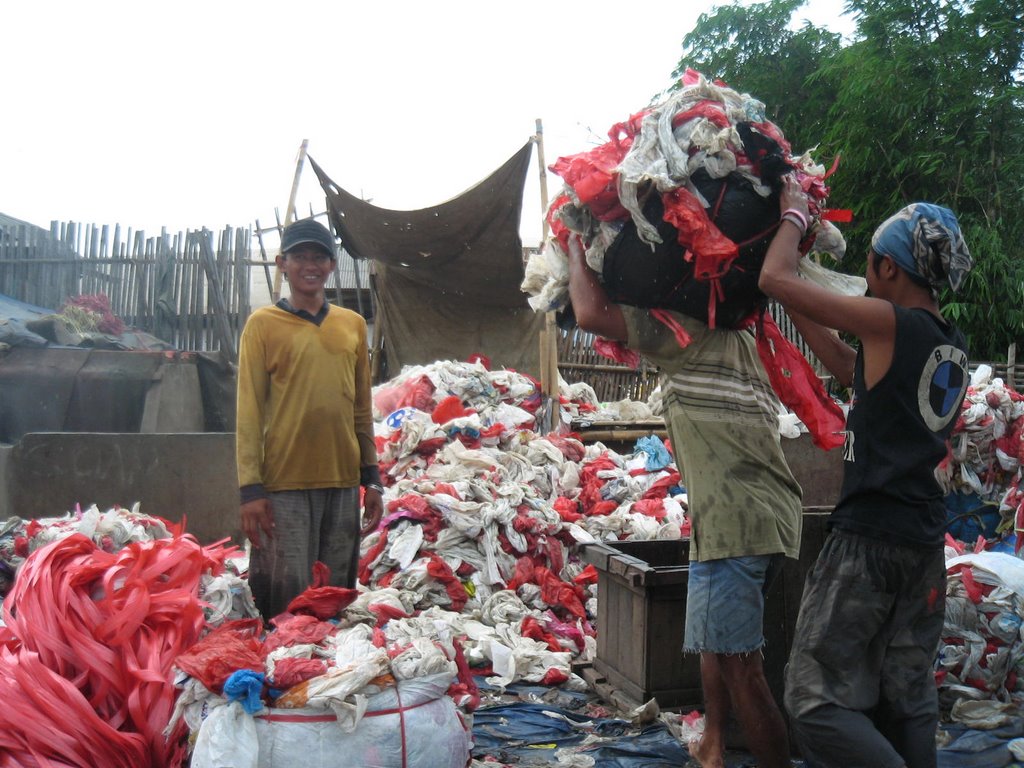
Charniyah doesn’t relish the idea of leaving the miniscule hut she has been living in for the past 10 years. Sitting with her baby on the porch of the hut made of cardboard, plywood and tarpaulin, she sighs, “The only skill I have is to scavenge, so every day I hope the disposal continues so we can make a living.”
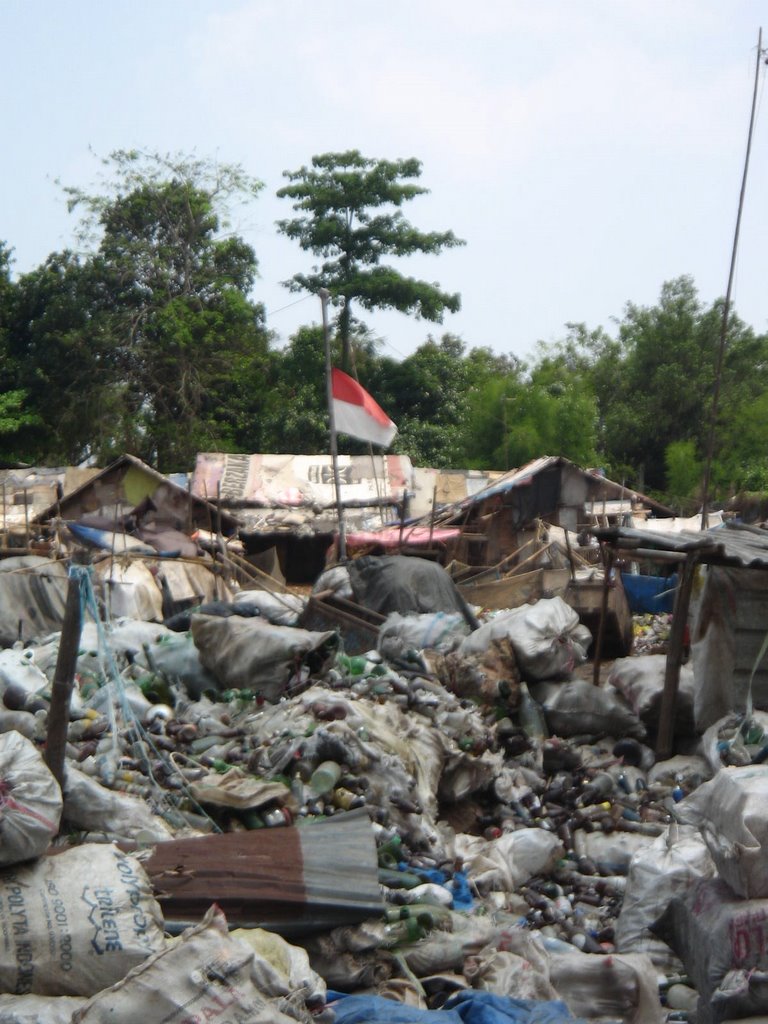
The stench of garbage and the flies buzzing are familiar to her. Just off the porch, bunches of threadbare clothing dangle from nylon ropes. The yard is so full of piles of collected trash that it is difficult to distinguish between the huts and the rubbish.
As far as the eye can see, tons of trash from small mountains, where men, women and children prowl around and fight with each other for usable items before the bulldozers and scrapers cover over the garbage.
“I do worry about my safety, but I am more worried about getting something to eat,” said Charniyah, referring to the collapse of refuse heap at the Bantar Gebang dump that killed three scavengers, two months ago.
Charniyah, 23, is one of the 3,000 scavengers living in the shanties scattered around the mountains of trash at the Bantar Gebang dump located about 13 kilometers away from city of Bekasi. Most of Jakarta’s garbage is sent at the dump. Around 600 trucks work around the clock to deliver about 6,000 tons of trash every day. Reaching up to 15 meters in height, these mountains of garbage provide sustenance for the people of Sumur Batu, Cikiwul, and Ciketing Udik subdistricts.
Charniyah’s family has eked out a harsh livelihood from the urban trash for many years. By age six, she had become a scavenger and is no stranger to hardship. Her father, a scavenger too, had brought her and her mother from their home village in Indramayu, West Java, to Bantar Gebang because he could not make a living as a landless peasant.
At the age of 12, a time when most children are enjoying their time at school, Charniyah chose to quit school to help her parents. Not long after that, she got married to a scavenger at the age of 13, and now she has two sons, a seven-year old, and a nine-month old.
The scavengers in Bantar Gebang have something in common: Most of them are landless peasants coming from areas, such as Karawang, Indramayu and Semarang. They rely on their bosses, who usually have links to some factories that buy the collected garbage in large quantities.
The scavengers compete to gather saleable items from dawn to dusk. Using hooks and baskets, they pick and choose tin and aluminum cans or other containers, plastic bags, bottles and bones from the mountains of trash. They are careful, however, to never pick a fight over any item, no matter how valuable it may seem. “If you don’t compete, you get nothing. However, nobody will ever snatch away a thing from the one who first picked it up; we are all in the same boat,” said Charsiti, 25, a mother of two.
Every 10 to 15 days – when the collected trash has been cleaned and sorted, the scavengers sell it to their boss for variety of prices depending on the type and quality of the items.
The most valuable trash is aluminum, worth Rp 6,000 (US$ 5) per kilogram. Plastic bags are woth Rp 2,500 per kilo while cans and bones bring in Rp 300 a kilo and bottles bring Rp 150 per kilo.
These are the fixed prices from the boss who provides them with land to erect their huts, and a water pump for each 30 houses. He also provides electricity for each house but not for free; he charges each household Rp 10,000 monthly.
Apart from that, the boss also fronts them cash for daily meals. “We choose the boss who can pay us beforehand, because we need the money on a daily bases,” Charsiti said. “Beside, who else would see you had money for meals if you got sick and could not work for one day or two?” said the women who has been a scavenger for four years.
In a month Charniyah’s family can make around Rp 400,000 but the money is mostly spent on food, especially for the children. “With no kids in the house, we spend only about Rp 10,000 for meals a day, but with two kids, that is not enough,” she said.
She acknowledged that sometimes, after calculating the price of the garbage they collect and subtracting the debt they owe for their daily meals, they might receive no cash at all from the boss. In that case, they would have to ask for loan.
When they face certain situation, such as getting seriously ill, or giving birth, they can only rely on the helping hands of their fellow scavengers. “Most of the time it is enough to rely on medicine we buy from nearby kiosks, but when we are seriously ill, our neighbors will chip in together to pay for medical treatment,” said the woman who had to pay Rp 150,000 to the midwife who helped her give birth to her youngest son.
In another hut, Sari, 25, has her own strategy for coping with the situation. Sometimes, she and her husband can save up to Rp 50,000 in their piggy bank because they have sent their two children to their parents in their village in Indramayu.
Before her marriage to a scavenger, Sari had worked at a shellfish nursery in Cilincing, North Jakarta, but now scours the mountains of rubbish for a living. “As a woman, I have to follow my husband, whatever his job is,” she said.
“The trouble with scavenging is that if you cannot overcome the fear in your heart, you won’t have anything to eat,” said this primary school dropout.
Even with the danger of landslides in mind, she has no intention of getting out of the scavenger business. “I had looked for jobs from door to door at many factories before I started scavenging, but every door I turned to was closed in my face because ia have no skills,” she added.
Like every other women in the scavenger community, she puts her hope in her children. “Gaining material things is impossible for me. No matter how I try, I never will. Therefore I would rather have lots of kids to take care of me when I get old,” she said smilingly.
Tarwin, 40, and Watinah, 30, a couple who have been scavengers for six years, have also sent their children to their parents, but they still cannot make ends meet.
“The hardest moment for us is on rainy days, when our boss doesn’t come to buy our things while we really need some money,” said Tarmin.
“Sometimes, when things are really hard, we even pick fish or fruit out of the trash, wash and eat it. Sometimes, we can even find instant noodles, sugar, or even a sack of rice in the refuse. Thank God we are rarely ill and are still alive until now,” said Watinah.
(Jakarta, Nov 23, 2006)
Charniyah doesn’t relish the idea of leaving the miniscule hut she has been living in for the past 10 years. Sitting with her baby on the porch of the hut made of cardboard, plywood and tarpaulin, she sighs, “The only skill I have is to scavenge, so every day I hope the disposal continues so we can make a living.”
The stench of garbage and the flies buzzing are familiar to her. Just off the porch, bunches of threadbare clothing dangle from nylon ropes. The yard is so full of piles of collected trash that it is difficult to distinguish between the huts and the rubbish.
As far as the eye can see, tons of trash from small mountains, where men, women and children prowl around and fight with each other for usable items before the bulldozers and scrapers cover over the garbage.
“I do worry about my safety, but I am more worried about getting something to eat,” said Charniyah, referring to the collapse of refuse heap at the Bantar Gebang dump that killed three scavengers, two months ago.
Charniyah, 23, is one of the 3,000 scavengers living in the shanties scattered around the mountains of trash at the Bantar Gebang dump located about 13 kilometers away from city of Bekasi. Most of Jakarta’s garbage is sent at the dump. Around 600 trucks work around the clock to deliver about 6,000 tons of trash every day. Reaching up to 15 meters in height, these mountains of garbage provide sustenance for the people of Sumur Batu, Cikiwul, and Ciketing Udik subdistricts.
Charniyah’s family has eked out a harsh livelihood from the urban trash for many years. By age six, she had become a scavenger and is no stranger to hardship. Her father, a scavenger too, had brought her and her mother from their home village in Indramayu, West Java, to Bantar Gebang because he could not make a living as a landless peasant.
At the age of 12, a time when most children are enjoying their time at school, Charniyah chose to quit school to help her parents. Not long after that, she got married to a scavenger at the age of 13, and now she has two sons, a seven-year old, and a nine-month old.
The scavengers in Bantar Gebang have something in common: Most of them are landless peasants coming from areas, such as Karawang, Indramayu and Semarang. They rely on their bosses, who usually have links to some factories that buy the collected garbage in large quantities.
The scavengers compete to gather saleable items from dawn to dusk. Using hooks and baskets, they pick and choose tin and aluminum cans or other containers, plastic bags, bottles and bones from the mountains of trash. They are careful, however, to never pick a fight over any item, no matter how valuable it may seem. “If you don’t compete, you get nothing. However, nobody will ever snatch away a thing from the one who first picked it up; we are all in the same boat,” said Charsiti, 25, a mother of two.
Every 10 to 15 days – when the collected trash has been cleaned and sorted, the scavengers sell it to their boss for variety of prices depending on the type and quality of the items.
The most valuable trash is aluminum, worth Rp 6,000 (US$ 5) per kilogram. Plastic bags are woth Rp 2,500 per kilo while cans and bones bring in Rp 300 a kilo and bottles bring Rp 150 per kilo.
These are the fixed prices from the boss who provides them with land to erect their huts, and a water pump for each 30 houses. He also provides electricity for each house but not for free; he charges each household Rp 10,000 monthly.
Apart from that, the boss also fronts them cash for daily meals. “We choose the boss who can pay us beforehand, because we need the money on a daily bases,” Charsiti said. “Beside, who else would see you had money for meals if you got sick and could not work for one day or two?” said the women who has been a scavenger for four years.
In a month Charniyah’s family can make around Rp 400,000 but the money is mostly spent on food, especially for the children. “With no kids in the house, we spend only about Rp 10,000 for meals a day, but with two kids, that is not enough,” she said.
She acknowledged that sometimes, after calculating the price of the garbage they collect and subtracting the debt they owe for their daily meals, they might receive no cash at all from the boss. In that case, they would have to ask for loan.
When they face certain situation, such as getting seriously ill, or giving birth, they can only rely on the helping hands of their fellow scavengers. “Most of the time it is enough to rely on medicine we buy from nearby kiosks, but when we are seriously ill, our neighbors will chip in together to pay for medical treatment,” said the woman who had to pay Rp 150,000 to the midwife who helped her give birth to her youngest son.
In another hut, Sari, 25, has her own strategy for coping with the situation. Sometimes, she and her husband can save up to Rp 50,000 in their piggy bank because they have sent their two children to their parents in their village in Indramayu.
Before her marriage to a scavenger, Sari had worked at a shellfish nursery in Cilincing, North Jakarta, but now scours the mountains of rubbish for a living. “As a woman, I have to follow my husband, whatever his job is,” she said.
“The trouble with scavenging is that if you cannot overcome the fear in your heart, you won’t have anything to eat,” said this primary school dropout.
Even with the danger of landslides in mind, she has no intention of getting out of the scavenger business. “I had looked for jobs from door to door at many factories before I started scavenging, but every door I turned to was closed in my face because ia have no skills,” she added.
Like every other women in the scavenger community, she puts her hope in her children. “Gaining material things is impossible for me. No matter how I try, I never will. Therefore I would rather have lots of kids to take care of me when I get old,” she said smilingly.
Tarwin, 40, and Watinah, 30, a couple who have been scavengers for six years, have also sent their children to their parents, but they still cannot make ends meet.
“The hardest moment for us is on rainy days, when our boss doesn’t come to buy our things while we really need some money,” said Tarmin.
“Sometimes, when things are really hard, we even pick fish or fruit out of the trash, wash and eat it. Sometimes, we can even find instant noodles, sugar, or even a sack of rice in the refuse. Thank God we are rarely ill and are still alive until now,” said Watinah.
(Jakarta, Nov 23, 2006)
Wednesday, November 22, 2006
Hawkers a threat to Senen traders
Traders at Senen market in Central Jakarta have complained the illegal street vendors in the area are hampering their business, while the market authority has done little to deal with the problem.
Almost 300 vendors sell their goods out of makeshift tents along the street in front of the market, blocking the entrance.
"It is hard for people to find the way into the marketplace. It is very crowded out there, making it uncomfortable for the shoppers to come in," said S. Hutapea, who sells clothing in a kiosk she rents for Rp 7 million (US$546) a year inside the market.
She said Thursday that her income had continued to decrease since the street vendors began invading the area a few years ago.
"Last year I could earn up to Rp 9 million a month, but this year I can only make up to Rp 5 million," she said while acknowledging that the public's reduced purchasing power could also be a contributing factor.
The street vendors mostly sell imported secondhand goods like clothing, shoes, bed sheets and curtains, which are more affordable and often of better quality than the items available inside the market.
"Outside it only costs them five Rp 5,000 to 10,000 to buy a complete outfit, while a new one would cost at least 25,000 inside," she added.
Raditantri Asri Hendrarti, an operational manager assistant of city market operator PD Pasar Jaya, which is in charge of Senen market, said they had trouble organizing the street vendors in order to create a better environment for the market vendors.
"They are so aggressive that they treat us as if they were the owners of the market facilities and we were the interlopers," she added
"Dealing with them is like having someone try to push something up your nose," she said, referring to the street vendors crowded around the main entrance of the market.
We can do nothing because they operate outside the marketplace. We have no authority to take action against them," she said.
Raditantri said the street vendors started to operate in the area in 1998 in the wake of the economic crisis that hit the country a year earlier. Since then, as many as 331 of the 2,588 kiosks have closed, partly because their owners could not compete with the illegal street vendors.
She also said that 18 tenants had broken their contracts with PD Pasar Jaya because they planned to move due to what they perceived to be the poor trading climate in the market. Many others said they could not afford to pay the monthly rent of Rp 1.5 billion.
Some of the vendors rented out their kiosks to other merchants, including dealers in secondhand clothing, even though the government officially bans the import of such goods.
"We are reluctant to enforce the subletting ban in their contracts, because they are long-term tenants, and we don't want to damage our relationship with them," Raditantri said.
Meanwhile, the street vendors said they would not mind moving from the area as long as the city administration provided them with an adequate alternative space to run their business.
"They should give us another space so we can still make a living for our families and send our kids to school," said L. Silaen, a mother of three and a secondhand clothing vendor.
"Don't treat us like trash, just find us another place," said Sonar Manulang, another vendor. (02/05)
The Jakarta Post, Saturday, November 11, 2006
Almost 300 vendors sell their goods out of makeshift tents along the street in front of the market, blocking the entrance.
"It is hard for people to find the way into the marketplace. It is very crowded out there, making it uncomfortable for the shoppers to come in," said S. Hutapea, who sells clothing in a kiosk she rents for Rp 7 million (US$546) a year inside the market.
She said Thursday that her income had continued to decrease since the street vendors began invading the area a few years ago.
"Last year I could earn up to Rp 9 million a month, but this year I can only make up to Rp 5 million," she said while acknowledging that the public's reduced purchasing power could also be a contributing factor.
The street vendors mostly sell imported secondhand goods like clothing, shoes, bed sheets and curtains, which are more affordable and often of better quality than the items available inside the market.
"Outside it only costs them five Rp 5,000 to 10,000 to buy a complete outfit, while a new one would cost at least 25,000 inside," she added.
Raditantri Asri Hendrarti, an operational manager assistant of city market operator PD Pasar Jaya, which is in charge of Senen market, said they had trouble organizing the street vendors in order to create a better environment for the market vendors.
"They are so aggressive that they treat us as if they were the owners of the market facilities and we were the interlopers," she added
"Dealing with them is like having someone try to push something up your nose," she said, referring to the street vendors crowded around the main entrance of the market.
We can do nothing because they operate outside the marketplace. We have no authority to take action against them," she said.
Raditantri said the street vendors started to operate in the area in 1998 in the wake of the economic crisis that hit the country a year earlier. Since then, as many as 331 of the 2,588 kiosks have closed, partly because their owners could not compete with the illegal street vendors.
She also said that 18 tenants had broken their contracts with PD Pasar Jaya because they planned to move due to what they perceived to be the poor trading climate in the market. Many others said they could not afford to pay the monthly rent of Rp 1.5 billion.
Some of the vendors rented out their kiosks to other merchants, including dealers in secondhand clothing, even though the government officially bans the import of such goods.
"We are reluctant to enforce the subletting ban in their contracts, because they are long-term tenants, and we don't want to damage our relationship with them," Raditantri said.
Meanwhile, the street vendors said they would not mind moving from the area as long as the city administration provided them with an adequate alternative space to run their business.
"They should give us another space so we can still make a living for our families and send our kids to school," said L. Silaen, a mother of three and a secondhand clothing vendor.
"Don't treat us like trash, just find us another place," said Sonar Manulang, another vendor. (02/05)
The Jakarta Post, Saturday, November 11, 2006
Domestic workers indispensable in society
How does it feel, to be without domestic staff?
Any working couple relying on a cleaning woman to keep the house in order and a nanny to bring up the children knows the answer. Although the holiday absence of domestic staff may not be the end of the world, one thing is for sure: Without them life can be hard.
Yohana Eti, 32, a career woman who is adverse to doing household chores, had to get up at the crack of dawn every day during Idul Fitri.
"I had to run around the house from early morning, even before my kids got up," said Yohana of her recent experience during the absence of both her cleaning woman and her nanny for the holiday.
She had to take care of her two sons, eight-year-old Kevin and three-year-old Angga, all by herself because her nanny had gone home for eight days and her husband was on duty at the factory where they both work.
"I had to pay extra attention to them, especially in the day time," said Yohana who clearly feels uncomfortable about the closeness of her children and their nanny.
She also had to do all of the cooking and laundry for the entire family.
Yohana, who has been married for seven years, and has had seven housekeepers in the interim, said the most difficult part of domestic work was trying to prepare meals while watching the children simultaneously.
"Last year, my mother was with us for the holiday so she could help us a bit, but this year was my first time entirely without staff and it was really hard," said Yohana who works at a beef canning factory in Tomang, West Jakarta.
Frustrated after only a day of domestic drudgery, Yohana took refuge at Mercury hotel in Ancol, North Jakarta, from Oct. 25 to 26.
"It was a total headache, I'm not used to taking care of the kids. I felt like I was botching up everything, so I called the hotel and luckily they still had some rooms available.
"I was forced to spend a whopping Rp 1.8 million, that is twice the amount I pay my household help in a month," said the woman who pays her cleaning woman Rp 300,000 (about US$33) monthly, and her nanny Rp 600,000.
"I can now understand how hard it must be to be a domestic worker. We really should treat them more like family because they fill in for us when we can't be there and keep the clutter away," said the resident of Cakung, East Jakarta.
Another couple, Ridaya and Rahmi Yunita, who have 18-month-old twins named Rensi and Rahmi, tried a different strategy for Idul Fitri, when their housekeeper and nanny took a vacation. They transported their twins to Rahmi's parents' home in Temanggung, Central Java, for two weeks for a holiday visit, and also in the hopes that Grandma could help with the children.
The couple spent a total of Rp 3.2 millions for the trip, but the strategy did not work. Rahmi's aging parent could not help much and they ended up having to take care of the twins by themselves.
"The life rhythm of the babies is so different and we are not used to it. Just to bathe and dress them is a struggle, and feeding them is even worse," said Ridaya, who works at a domestic non-governmental organization in Kalibata, South Jakarta.
The couple praised their household help, saying: "They are extraordinary people. We never imagined how hard their burden was. They spend more than 15 hours daily taking care of our children; that's far more than the normal working hours for any adult. They deserve better treatment and better wages."
According to Federika Tadu Hungu, a development sector consultant: "Domestic staff are a necessity nowadays. The traditional role of man as breadwinner is now under challenge. Women, as well as men, now have to work in order to make a reasonable living."
Federika, who studied at the Institute of Social Studies in the Netherlands, and has written two books about gender and development, added that: "As a result, the care-giving, such as laundering, cooking, washing and looking after the children, which has been regarded traditionally as the woman's role has been shifted to a third party, such as a housekeeper or babysitter."
"Therefore, domestic staff should be regarded as professionals and paid properly," she wrote.
The Jakarta Post, Saturday, November 18, 2006
Any working couple relying on a cleaning woman to keep the house in order and a nanny to bring up the children knows the answer. Although the holiday absence of domestic staff may not be the end of the world, one thing is for sure: Without them life can be hard.
Yohana Eti, 32, a career woman who is adverse to doing household chores, had to get up at the crack of dawn every day during Idul Fitri.
"I had to run around the house from early morning, even before my kids got up," said Yohana of her recent experience during the absence of both her cleaning woman and her nanny for the holiday.
She had to take care of her two sons, eight-year-old Kevin and three-year-old Angga, all by herself because her nanny had gone home for eight days and her husband was on duty at the factory where they both work.
"I had to pay extra attention to them, especially in the day time," said Yohana who clearly feels uncomfortable about the closeness of her children and their nanny.
She also had to do all of the cooking and laundry for the entire family.
Yohana, who has been married for seven years, and has had seven housekeepers in the interim, said the most difficult part of domestic work was trying to prepare meals while watching the children simultaneously.
"Last year, my mother was with us for the holiday so she could help us a bit, but this year was my first time entirely without staff and it was really hard," said Yohana who works at a beef canning factory in Tomang, West Jakarta.
Frustrated after only a day of domestic drudgery, Yohana took refuge at Mercury hotel in Ancol, North Jakarta, from Oct. 25 to 26.
"It was a total headache, I'm not used to taking care of the kids. I felt like I was botching up everything, so I called the hotel and luckily they still had some rooms available.
"I was forced to spend a whopping Rp 1.8 million, that is twice the amount I pay my household help in a month," said the woman who pays her cleaning woman Rp 300,000 (about US$33) monthly, and her nanny Rp 600,000.
"I can now understand how hard it must be to be a domestic worker. We really should treat them more like family because they fill in for us when we can't be there and keep the clutter away," said the resident of Cakung, East Jakarta.
Another couple, Ridaya and Rahmi Yunita, who have 18-month-old twins named Rensi and Rahmi, tried a different strategy for Idul Fitri, when their housekeeper and nanny took a vacation. They transported their twins to Rahmi's parents' home in Temanggung, Central Java, for two weeks for a holiday visit, and also in the hopes that Grandma could help with the children.
The couple spent a total of Rp 3.2 millions for the trip, but the strategy did not work. Rahmi's aging parent could not help much and they ended up having to take care of the twins by themselves.
"The life rhythm of the babies is so different and we are not used to it. Just to bathe and dress them is a struggle, and feeding them is even worse," said Ridaya, who works at a domestic non-governmental organization in Kalibata, South Jakarta.
The couple praised their household help, saying: "They are extraordinary people. We never imagined how hard their burden was. They spend more than 15 hours daily taking care of our children; that's far more than the normal working hours for any adult. They deserve better treatment and better wages."
According to Federika Tadu Hungu, a development sector consultant: "Domestic staff are a necessity nowadays. The traditional role of man as breadwinner is now under challenge. Women, as well as men, now have to work in order to make a reasonable living."
Federika, who studied at the Institute of Social Studies in the Netherlands, and has written two books about gender and development, added that: "As a result, the care-giving, such as laundering, cooking, washing and looking after the children, which has been regarded traditionally as the woman's role has been shifted to a third party, such as a housekeeper or babysitter."
"Therefore, domestic staff should be regarded as professionals and paid properly," she wrote.
The Jakarta Post, Saturday, November 18, 2006
Tuesday, April 25, 2006
Pelangi di kala senja dan Masa Lalu yang Terkenang

Pasukan Indonesia sudah mulai melancarkan serangan-serangan dari wilayah-wilayah perbatasan seperti Maliana dan Suai. Desas-desus yang terdengar ialah : “segera setelah menyerah yang laki-laki akan dibunuh, dibelah dua dan perempuan diperkosa”.
Tiga keluarga mendaki bebukitan mencari tempat aman di hutan, menghindari tentara Indonesia. Mereka cuma punya tiga senjata. Satu senjata laras panjang dan dua pistol.
Maka datanglah saat itu, saat ketika tidak ada bekal yang dapat dimakan lagi. Buah kusambi dan air kali menjadi satu-satunya harapan. Tentara Indonesia mengepung dari segala arah, bagaikan pagar betis.
Semua anggota rombongan sudah lelah. Ada dua pilihan: turun gunung untuk menyerah atau bertahan di hutan. Sang ayah berkata: saya tak mungkin menyerah, laki-laki yang menyerah pasti dibunuh. Tapi perempuan dan anak-anak mungkin tak apa-apa.
Lalu voting pun dibuat, ikut ayah atau ikut ibu. Semua anak dan anggota keluarga yang lain ingin ikut ibu. Hanya Sam dan seorang anak kerabat yang lain memilih ikut sang ayah. Senjata diberikan kepada yang tidak menyerah. “Menembak saja saya belum bisa” kata Sam mengenang bagaimana ia pertama kali memegang senjata api.
Maka mereka pun berpisah. Jalan mendaki dilalui dengan tangis dan air mata. “Kami mendaki sambil menangis, tapi tak ada pilihan”. Sekali-sekali mereka menoleh ke belakang, memastikan ibu dan saudara-saudaranya selamat. Kata sang ayah, jika mereka lewat dengan selamat, kita terus. Tetapi jika kita mendengar tembakan, kita harus menyerang tentara Indonesia, kita tak mungkin membiarkan ibu dan saudara-saudara kamu mati tanpa perlawanan.
Berkali-kali ayah harus naik ke puncak pohon untuk memastikan keselamatan anggota keluarganya yang menyerah.
Setelah ibu dan saudara-saudaranya diperkirakan melewati daerah yang dianggap aman, merekapun bergerak maju.
Di suatu perhentian, sang ayah menyuruh kedua bocah itu bersembunyi sementara ia sendiri menyelinap mencari jalan keluar dari hadangan bala tentara Indonesia. Bekal daging kuda dan masing-masing sepucuk senjata di tangan. Rerumputan ditutup di atas kepala. “Jangan ke mana-mana” pesan sang ayah.
Beberapa lama setelah ayah pergi, terdengar tiga kali tembakan. Berselang beberapa menit sepasukan tentara datang menderu. Kedua bocah itu tetap diam di tempat. “rebut-rebut” begitulah kata bahasa Indonesia pertama yang sempat didengar, tanpa dimengerti artinya. Keduanya hampir tak bernapas di tempat. Apalagi seorang tentara duduk tepat di atas kepala kedua bocah itu.
Sekitar setengah jam setelah para tentara itu pergi, keduanya berlari menyusul sang ibu dan anggota keluarga yang lain. Berhasil menyusul memang. “papa mungkin sudah mati, kami mendengar tiga kali tembakan setelah mama dan adik-adik pergi”, lapor si kecil. Semua duduk tanpa kata. Hanya airmata berlinang.
Selang beberapa jam, muncul sesosok tumbuh merayap dari arah sebuah kali. Ternyata itu ayah yang terluka parah di kaki. Ia dihadang tentara, dan melarikan diri meninggalkan senjatanya. Untunglah ia mampu menyelematkan diri. Sepotong kain diikatkan ke kaki kiri. Ia menyusuri sungai agar tetesan darahnya tidak terlacak oleh musuh.
Dua minggu bertahan, akhir mereka memilih menyerah.
Ia ingat bagaimana ayahnya dipukul orang-orang banyak. Semua orang mengambil bagian. Bukan cuma tangan yang dipakai, tapi juga batu dan kayu.
Untunglah seorang Koramil di Same yang menyuruh seorang Hansip membawa ke rumahnya. “Kamu kristen?” tanya sang Koramil begitu ia sampai di hadapannya. “Iya”,
“Punya Alkitab?”
“Ada tapi di rumah”
Sang Koramil lalu menyuruh dua orang Hansip mengawal sang ayah ke rumah mereka untuk mengambil Alkitab.
Alkitab berbahasa Portugis itu dibolak balik isinya untuk dibandingkan dengan Alkitab berbahasa Indonesia milik sang Koramil. Rupanya sang Koramil belum yakin kalau ayahnya sungguh seorang Kristen. Dalam pikiran militer Indonesia seorang pemimpin Fretilin tak mungkin pemeluk kristen, karena mereka termakan propaganda bahwa Fretilin adalah komunis. Setelah memastikan Alkitab itu sama, sang Koramil memeluk sang ayah.
Baru dikemudian hari mereka tahu kalau, saudara-saudaranya yang tertangkap di Dili menitipkan pesan kepada sang Koramil agar menyelamatkan keluarga sang ayah, karena mereka bukan komunis.
Dalam tahun itu juga, sang Koramil pun mengajak ayah Samuel membangun gereja. Gereja pun berkembang pesat. Banyak orang datang untuk memberi diri dibaptis. Karena ketakutan dituduh komunis, banyaknya orang yang datang memberi diri untuk dibaptis.
Samuel mengingat dalam sebuah peristiwa pembaptisan, dua orang pendeta militer membaptis orang sampai jam tiga pagi. Sayang kakak dari sang ayah dan beberapa orang menolak berpindah agama demi prinsip. Mereka dibunuh oleh karenanya. Dari sinilah asal-usul berkembangnya jemaat protestan di Same, Manufahi.
Namun derita keluarga ini tak jua berakhir. Ada banyak alasan mengapa mereka dimusuhi dan dianiaya: Pemimpin Fretilin, protestan.
Ia ingat bagimana ia dan kakaknya Daniel harus bersembunyi di semak-semak setiap jam istirahat sekolah, karena anak-anak lain akan memukuli mereka, mengangkat mereka dan membuang di lumpur.
Di kala bel jam istirahat akan dibunyikan, ia sudah harus dekat-dekat pintu kelas, memastikan dapat cepat-cepat melarikan diri ke semak-semak. Ia hanya kembali kalau lonceng tanda jam istirahat berakhir. Hanya di kelas ia sedikit merasa aman.
Jangan harap di luar kelas para guru bisa membantu, karena merekapun menanggap anak-anak ini adalah anak-anak GPK yang “wajib” dianiaya. Karena tak kuat menahan aniaya, Daniel sang kakak, memutuskan untuk pindah ke Dili setelah menamatkan SD.
Sang ayahpun berkali-kali ingin dibunuh. “Tapi entah mengapa pertolongan Tuhan selalu luar biasa” ujar Samuel.
Sekali waktu seorang hansip yang terkenal berdarah dingin, diperintahkan menangkap sang ayah. Ternyata, tanpa diketahui pemberi perintah, sang hansip ini adalah anak baptis (God son) dari sang ayah. Si Hansip datang mendahului pasukan algojo pengeksekusi, memberitahukan rencana jahat itu.
“Bapa, saya diperintahkan menangkap bapa untuk dibunuh, saya menerima perintah itu dengan maksud saya bisa memberitahu bapak untuk menyelamatkan diri. Sekarang juga bapa meninggalkan rumah ini” kata sang anak baptis kepada sang bapa baptis itu.
Di lain kesempatan yang diperintahkan justru adalah anak angkat sang ayah. Ia juga menjalankan trik serupa untuk meloloskan sang ayah angkat.
Jam menunjukkan pukul 6.20 ketika pelangi senja menyapu langit di atas Dili. Perjanjian perdamaian itu masih ada untuk anak-anak Timor Leste. Masa lalu memang tak selalu indah dikenang. Terlalu sakit untuk dikenang, terlalu berharga untuk dilupakan.
Namun jika anak-anak kita masih bisa berlari bebas dibawah rintik hujan, itu bukti bahwa harapan masa depan selalu ada. Ia menanti dengan damai. Pelangi setelah usai rinai gerimis membuat perasaanku sendu, sesendu rasa anak-anak Timor yang menderita ataupun mungkin mati selama invasi dan pendudukan negaraku tercinta Indonesia yang mukadimah UUD-nya tertulis: “bahwa sesungguhnya kemerdekaan itu ialah hak segala bangsa”. Entah berapa puluh tahun dan berapa ribu kali sebaris kata ini harus dibaca untuk bisa dimengerti.
Dili, 24 July 2005
Thursday, April 20, 2006
Monday, August 29, 2005
Media Massa Indonesia Berbohong Lagi tentang Timor Leste*

PADA 8 Mei 2005, majalah Tempo memberitakan penembakan terhadap tentara Indonesia oleh anggota Border Patrol Unit (BPU) Kepolisian Nasional Timor Leste di Daerah aliran sungai Malibaca yang membatasi Timor Leste dan Indonesia.
Tak satupun sumber Timor Leste dikutip. Sumber Indonesia yang dikutip pun hanya sumber pemerintah seperti pejabat militer atau pejabat sipil. Pernyataan Kolonel Amir Hamka Manan, Komandan Korem 161 Wirasakti Kupang bahkan dijadikan eye-catcher.
Klarifikasi terhadap sikap pemerintah Timor Leste malah didapatkan dari Kolonel Manan. Singkat cerita, Tempo melaporkan beberapa hal: (1) bahwa pasukan Indonesia sedang melakukan patroli rutin dan memergoki pelintas batas, (2) bahwa para penyelundup yang bersenjatakan parang, mengancam dan melempari tentara Indonesia (3) bahwa penembakan dilakukan terlebih dahulu oleh pihak Timor Leste, (4) bahwa lima polisi pelaku penembakan telah dinonaktifkan dan empat dari sembilan warga sipil yang terlibat penyeludupan telah tertangkap.
Sebagaimana jadinya sebuah pemberitaan yang sepihak, apa yang hilang dari pemberitaan Tempo adalah kemungkinan lain dari apa yang keluar dari mulut sumber resmi seperti pejabat militer. Apa yang ditulis Tempo ternyata jauh berbeda bahkan bertolak belakang dengan versi polisi Timor Leste, setelah diklarifikasi oleh penulis langsung ke tempat penembakan di sub-distrik Tapo Memo Timor Leste.
Pihak kepolisian Timor Leste menyatakan bahwa pihak pasukan Indonesia justru membekingi penyeludupan. Komandan BPU di Tapo Memo, Abilio Carvalho mengatakan: “Bagaimana bisa dikatakan berpatroli dan memergoki pelintas, kalau barang-barang dari Timor Barat ditumpuk dulu di pos tentara?” Carvalho mengatakan bahwa penembakan itu terjadi saat anggota TNI melakukan transaksi curang dengan masyarakat dimana isi jerigen yang ditransaksikan bukanlah minyak tanah melainkan air.
Seorang pelaku akhirnya mengetahui kecurangan ini dan berlari ke arah Timor Leste tanpa membayar untuk memberitahu teman-temannya yang telah lebih dahulu melakukan transaksi. Tiga anggota TNI lantas mengejar ke arah Timor Leste namun dihadang oleh polisi Timor Leste. Peringatan pihak Timor Leste tidak diindahkan.
Bahkan Lettu Teddy Setyawan terlebih dahulu menembak tiga kali di dalam wilayah Timor Leste. Polisi Timor Leste akhirnya menembak paha kiri Lettu Tedy Setyawan. “Kalau kami memang ingin membunuh mereka, mereka tidak akan kembali hidup-hidup, karena ada yang sudah masuk sampai dalam air dan gampang menembaknya” kata seorang anggota BPU di pos Tapo Memo.
Hasil investigasi sementara yang dilakukan Kolonel Fernando Reis, Perwira Penghubung Militer PBB pun ditolak oleh Komandan Satgas Pamtas NTT-Timtim, Letkol Art Yul Aviandi.
Pemberitaan sepihak ini tak hanya dilakukan oleh Tempo. Republika-online 16 Mei 2005 mengutip Kol. Manan yang meragukan kenetralan penyelidik PBB dan karenanya menolak secara tegas hasil investigasi itu. Media Indonesia Online bahkan mengutip Kol.
Manan yang menyatakan bahwa penembakan itu telah direncanakan. Wartawan senior Antara, Peter Tukan panjang lebar menguraikan hubungan sejarah dan budaya Timor Leste dan Timor Barat di Antara News, sambil menuduh Pasukan Penjaga Perdamaian PBB, “bangsa Barat” dan “bangsa tertentu” telah mengadu domba kedua belah pihak. Detikcom menulis: Penembakan pada Tedy Setyawan terjadi akibat penyerangan sekelompok warga bersenjata dari Timor Leste.
Memang bukan baru sekarang pemberitaan media massa Indonesia tentang Timor Leste sarat propaganda. Invasi Indonesia yang didasari oleh pre-text Fretilin sebagai ancaman komunis lain di Asia Tenggara selain Vietnam, ditelan mentah-mentah oleh media massa Indonesia.
Menjelang pendaratan pasukan Indonesia di Timor Portugis pada tahun 1974, propaganda anti-komunis mulai memenuhi halaman-halaman media massa Indonesia. Awal Agustus 1974 sejumlah media massa Indonesia terutama Berita Yudha, mulai menuduh Asosiasi Sosial Demokrat Timor (Associacão Social Democrata Timorence, ASDT) mencari dukungan komunis.
Sejak pertengahan 1974 RRI Kupang telah mengudarakan sejumlah siaran yang mencoba mendiskreditkan dua partai utama, mencap Fretilin sebagai komunis dan UDT sebagai neo-fasis. Media-media di Indonesia mengangkat cerita tentang infiltrasi Komunis Cina ke koloni ini, laporan tak pernah terbukti kebenarannya.
Juga ada sejumlah berita tentang kekerasan politik, misalnya pada 12 September 1974 Sinar Harapan, menurunkan laporan tentang pembunuhan liurai Ainaro bersama lima orang keluarganya. Juga tak pernah terbukti kebenarannya. Di akhir tahun 1974 juga ada sejumlah laporan yang salah tentang orang Timor yang mengungsi ke wilayah Indonesia untuk menghindari kekerasan dan penyiksaan. November 1974, pers Jakarta memuat cerita tentang keterlibatan Cina (terutama Maois) dalam masalah Timor yang menyitir bahwa demonstrasi-demonstrasi dibiayai oleh ‘Cina kiri’. Sebuah artikel Berita Yudha memberitakan empat anggota klandestin Cina memasuki Timor lewat Australia.
Topik yang tidak pernah disentuh samasekali oleh media massa Indonesia adalah manuver diplomatik dan taktik disinformasi yang lancarkan operasi intelijen Indonesia terhadap Timor Portugis sejak Oktober 1974.
Operasi yang diberi nama Operasi Komodo itu melibatkan sejumlah intel sipil dan militer dibawah koordinasi Bakin/Opsus dipimpin oleh Jenderal Ali Murtopo, asisten pribadi presiden Soeharto. Sampai Februari 1975 propaganda Bakin/Opsus lewat media-media massa Indonesia mencapai puncaknya. Propanganda-propaganda ini bertujuan mengantagoniskan tim dekolonisasi portugis yang sedang berusaha keras memperkuat komitmen mereka terhadap penentuan nasib sendiri rakyat Timor, dan untuk menghancurkan koalisi UDT dan Fretelin.
Selama masa pendudukan Indonesia, jelas gerakan-gerakan pembebasan Timor Leste telah diadili lebih dahulu oleh media, sebelum diadili oleh pengadilan. Media seakan tak mampu melepaskan diri dari “kewajiban” menjadi corong penguasa.
Hasil penelitian penulis tentang pemberitaan media massa Indonesia tentang Timor sejak tahun 1974-1999 menunjukkan bahwa hanya majalah Tempo yang relatif berimbang dalam pemberitaan, dibanding media mainstream lain seperti Kompas, Sinar Harapan atau Suara Pembaruan, dan Media Indonesia. (Messakh, 2004).
Ketiga perang saudara meletus di Timor pertengahan Agustus 1975 misalnya, hanya Tempo yang mengirimkan wartawan George Junus Aditjondro ke Dili dan Salim Said ke Portugal. Hasilnya, laporan utama edisi 6 September 1975 yang diberi judul utama; “Cerita dari Portugal” lumayan berimbang.
Walaupun disana sini muncul caption foto yang terasa tendensius dan mengganggu, berimbangnya peliputan Tempo ini menunjukkan suatu pencapaian yang luar biasa jika mengingat kontrol yang luar biasa terhadap media pada saat itu. Kita ingat baru awal tahun 1974 sejumlah pers yang vokal seperti Indonesia Raya dan Mahasiswa Indonesia dibredel pasca peristiwa Malari.
Media jelas bukanlah pengadilan yang berhak menentukan benar dan salahnya masing-masing pihak. Tetapi dengan hanya menggaungkan suara sumber-sumber dominan, media jelas telah mengambil alih tugas pengadilan. Pengadilan oleh pers inilah yang berlaku terhadap gerakan pembebasan selama masa pendudukan Indonesia di Timor Leste.
Apa yang dikatakan Noam Chomsky dan Edward Herman (Manufacturing Consent - The Political Economy of the Mass Media, 1988) sebagai propaganda media adalah kondisi dimana media cenderung melayani tujuan-tujuan elite yang dominan di dalam negara dimana kendali kekuasaan sepenuhnya ditangan birokrasi negara dimana kontrol monopolistik dan aturan formal penyensoran atas media diberlakukan.
Model propaganda ini menguraikan ketidakdilan dalam kekayaan dan kekuasaan dan efek bergandanya pada kepentingan dan pilihan media massa. Uang dan kekuasaan dapat menyaring habis berita yang layak diberitakan, meminggirkan lawan atau pihak yang bertentangan, dan membiarkan penguasa dan kepentingan-kepentingan pribadi yang dominan menyebarkan pesan mereka ke publik.
Menurut model ini, untuk bisa dimuat sebuah berita harus melewati sejumlah filter: (1) besar kecilnya kepemilikan dan terkonsentrasinya kepemilikan media, dan orientasi profit dari perusahaan media massa yang dominan; (2) periklanan sebagai sumber pendapatan utama media massa. Seperti yang dikatakan McLuhan: “Iklan selalu merupakan berita baik”. Untuk menjaga keseimbangan iklan, media perlu memuat sebanyak mungkin berita buruk. Analisis ini sebagian menjelaskan kesulitan para politisi menjual pesan positif, dan munculnya spin-doctor. (3) ketergantungan media kepada informasi yang disiapkan oleh sumber-sumber pemerintah, bisnis dan “ahli” yang dibiayai atau disenangi sumber-sumber utama dan agen kekuasaan tersebut; (4)”flak” sebagai sebuah tujuan untuk mendisiplinkan media; dan (5)”anti-komunis” sebagai sebuah agama nasional dan mekanisme kontrol.
Elemen-elemen ini berinteraksi dan memperkuat satu sama lain. Bahan mentah untuk sebuah berita harus melewati filter-filter ini. Apa yang tersisa kemudian hanyalah ampas untuk diberitakan. Hasil saringan ini pertama-tama harus cocok dengan diskursus, interpretasi, dan definisi tentang apa yang layak diberitakan (newsworthy) yang sekaligus menjelaskan dasar dan pola kerja dari apa yang disebut sebagai propaganda.
Propaganda media massa seperti inilah yang meracuni hati dan pikiran banyak orang Indonesia tentang Timor. Selama lebih dari 24 tahun orang Indonesia tidak pernah mengetahui sepenuhnya apa yang terjadi di Timor Leste.
Sejarah Timor adalah sejarah tersembunyi bagi banyak orang Indonesia. Yang tertanam dalam benak kebanyakan orang Indonesia adalah bahwa orang Timor tidak tahu berterima kasih, sudah dilepaskan dari komunisme dan dianak-emaskan dalam pembangunan, tapi selalu ingin memberontak.
Yang tidak muncul dalam benak kita adalah bahwa pemerintah dan militer Indonesia telah memperkosa kemerdekaan orang Timor dan bahwa pihak diplomat dan intelijen Indonesia berada di balik rekayasa perpecahan partai-partai dan membesar-besarkan keinginan untuk berintegrasi dengan Indonesia yang sebenarnya diinginkan oleh tak lebih dari 8% pengikut partai Apodeti. Orang-orang Apodeti yang kemudian pro-Indonesia jelas menginginkan kemerdekaan. Ideologi komunis menjadi racun yang mujarab. Karena itulah koalisi antara Fretilin dan UDT perlu dihancurkan agar lebih banyak orang Timor yang pro-intergrasi. Koalisi itu hanya berumur kurang lebih seminggu. Setelah koalisi UDT-Fretilin pecah, terbentuklah Movimento Anti-Comunist (MAC), yang merupakan fusi partai UDT, KOTA dan Trabalista untuk mengayang Fretilin yang dituduh komunis.
Sejarah Timor Leste merupakan sejarah yang tak lepas dari propaganda media, baik media massa Indonesia maupun media-media barat yang semula menyantap mentah-mentah apa yang dikeluarkan Antara, kantor berita resmi pemerintah Indonesia. Propaganda secara sadar maupun tidak jelas membuktikan bahwa tangan sejumlah media juga berdarah-darah dalam sejarah Timor.
Semestinya, propaganda semacam ini semakin absen ketika kepemilikan media-media tidak dimonopoli penguasa dan sensor resmi tidak lagi diberlakukan. Apalagi ketika media aktif bersaing, secara rutin menyerang dan membeberkan kesalahan korporasi dan pemerintah, secara agresif menggambarkan diri mereka jurubicara kebebasan berpendapat dan kepentingan umum.
Apa yang tidak terbukti adalah keterbatasan dari kritik media dan adanya ketidakdilan yang luar biasa dalam pengarahan sumberdaya dan efeknya pada akses kepada media swasta dan pada tingkah laku serta penampilan media.
Lalu apa sebenarnya masalah kronis pemberitaan media massa Indonesia tentang Timor Leste? Ada semacam pola yang berulang dalam pemberitaan media massa Indonesia sejak tahun 1975 sampai sekarang.
Pertama, ketergantungan pada sumber-sumber resmi pemerintah atau sumber yang pro pemerintah. Media massa tertarik ke dalam hubungan symbiotik dengan sumber-sumber informasi yang powerful melalui kebutuhan ekonomis dan pertautan kepentingan. Media membutuhkan sumber aliran yang kuat dan reliable untuk bahan mentah berita. Media mempunyai tuntutan rutin berita dan jadwal imperative yang harus mereka penuhi. Media sebesar apapun tak mungkin mempunyai reporter dan kamera di semua tempat dimana berita penting mungkin saja muncul. Ekonomi mengarahkan mereka memusatkan sumberdaya mereka dimana berita sering muncul, dimana desas-desus dan bocoran penting sering muncul dan dimana konferensi pers secara rutin dilakukan. Mark Fishman menyebut hal ini sebagai "the principle of bureaucratic affinity: only other bureaucracies can satisfy the input needs of a news bureaucracy."
Pola kedua adalah ideologi anti-komunis yang sebelumnya dilayani dengan baik yang sekarang mulai berganti wajah menjadi ideologi anti-asing, sejak isu komunisme menjadi isu yang tak hangat lagi pasca Perang Dingin. Sebagaimana kebanyakan orang, media massa pun seperti setengah hati melepas Timor. Bagaimanapun usaha untuk memoles sebuah berita, dendam terhadap keterlibatan entitas asing akan nampak dalam pemberitaan.
Ketiga, kekuatiran akan tanggapan negatif (flak) terhadap pernyataan atau pemberitaan media. Perang melawan premanisme yang gencar dalam media massa Indonesia merupakan salah satu bukti bahwa “flak” merupakan sesuatu yang mengancam dan mahal bagi bagi media. Pemberitaan tentang Timor Lorosae tentu berada di bawah bayang-bayang tanggapan negatif ini.
Lepas dari sejumlah pencapaian profesionalisme yang mengagumkan dari media seperti yang terjadi pada Tempo, filter-filter ekonomi dan politik ternyata masih berlapis-lapis dalam news-room media massa di Indonesia.
Dengan hanya menggaungkan suara dari sumber-sumber resmi seperti TNI dan anggota DPR yang belum tentu berada di tempat kejadian, media massa Indonesia jelas telah menjadi corong propaganda kelompok dominan. Apalagi komentar sumber resmi itu sering bernada jingoistik, percaya secara ekstrim bahwa negara sendiri selalu yang terbaik. Wakil Ketua DPRD NTT, Kristo Blasin yang dikutip Tempo misalnya menyatakan bahwa warga Timor Leste saat ini sedang mengalami krisis ekonomi, sehingga kerap berbuat apa saja untuk mempertahankan hidupnya, termasuk melakukan penyeludupan. Cuap-cuap para anggota DPR sekarang mengingatkan kita akan HJ Naro, wakil ketua DPR yang mewakili daerah Nusa Tenggara, yang sejak awal dekolonisasi Timor, rajin berkomentar soal Timor dan samasekali tidak menyukai pemberian dukungan kepada orang Timor untuk membentuk suatu negara merdeka.
Ideologi anti-komunis jelas tidak begitu relevan lagi setelah berakhirnya Perang Dingin, tetapi pola “mencari kambing hitam” tetap berulang dalam hubungan antar bangsa. Dan media yang gemar mengutip komentar pejabat bernada demikian, sebenarnya telah mempropagandakan dengan baik semangat itu. Kebenaran dan fakta bukan lagi ukuran atas nama nasionalisme sempit. Pertanyaan yang muncul, apa untungnya melakukan pemberitakan sepihak yang dengan sendirinya berarti menjelekkan Timor Leste di saat pemimpin kedua negara ini telah melakukan berbagai langkah untuk hidup berdampingan secara damai?
Pemberitaan peristiwa penembakan di sungai Malibaca ternyata membuktikan media massa Indonesia belum bergeser jauh dari kegemaran mengumandangkan suara kelompok dominan. Pemberitaan yang sekedar mengutip komentar pejabat (talking news) seperti ini menunjukkan dengan jelas bahwa media massa sebenarnya tidak peduli dengan kenyataan yang sebenarnya terjadi dibalik sebuah peristiwa. Peristiwa itu tentu berharga sebagai berita (newsworthy) tetapi kebenaran dibalik peristiwa itu tidak pernah disentuh.
Sebuah penyeludupan bukan pencurian. Penyeludupan adalah sebuah transaksi ilegal, yang tentu melibatkan lebih dari satu pihak. Pertanyaan yang perlu dijawab adalah dengan siapa rakyat Timor Leste melakukan penyeludupan. Yang jelas, kita tahu bahwa hanya TNI dan Polri yang punya kuasa dan senjata di wilayah perbatasan.
Rezim telah berubah, tetapi ternyata media belum berubah. Sumber tentara dan offisial pemerintah tetap menjadi sumber kegemaran entah karena alasan keterbatasan sumber daya, kuasa absolut editor atau kemalasan wartawan.
Padahal menyeberang ke Dili bukan masalah besar bagi media besar macam Tempo. Media massa Indonesia, sadar atau tidak melayani kepentingan kelompok dominan dengan baik dalam soal Timor Leste. Apapun kepentingan itu, propaganda semacam ini jelas menguntungkan pihak yang pesan sampai kepada pembaca. Pihak yang pesannya tak sampai jelas menjadi korban pengadilan media. Berubahnya istilah Timor-Timur menjadi Timor Leste dalam pemberitaan media massa Indonesia tak membuktikan perubahan apa-apa.
*pernah dimuat di majalah Talitakum, edisi Juni 2005
Subscribe to:
Posts (Atom)