Thursday, December 21, 2006
The Jakarta Post, Jakarta
Four high schools in Greater Jakarta have integrated green and energy-efficient practices into their learning and teaching processes, thanks to the support of two foundations concerned about environmental issues.
Islamic vocational high school SMK Al Muslim in Bekasi, private vocational high school SMK Wikrama in Bogor, state high school No. 13 in South Jakarta, and state high school No. 69 in Kepulauan Seribu have each received Rp 25 million from the Indonesian Biodiversity Foundation (KEHATI) and the Coca-Cola Foundation (CCF) to run their environmental programs.
"We hope that environmental issues, which are becoming increasingly more complex, also become a youth concern," Christien Ismuranty from KEHATI said Tuesday.
"We hope schools adopt a perspective on the environment and approach their management and curriculum from that perspective," she added.
KEHATI and CCF held in 2005 a competition to select high schools that were models in their communities for healthy, safe and environmentally sound practices. The four schools beat out 16 other competitors.
Under the Go Green School program, KEHATI and CCF, along with a number of other NGOs, help schools integrate a range of issues like energy conservation and recycling into their curriculum.
After a year, SMK Wikrama Bogor was selected as the best model and received another Rp 10 million to finance its green program.
The emphasis on environmental friendliness spurred SMK Wikrama to stock nutritious food in its canteen -- including vegetables grown in the schoolyard -- save money by reducing consumption and energy costs, increase the protection of natural resources and better manage its garbage.
The other three model schools practiced pollution prevention, recycling, energy efficiency and waste reduction, as well as introducing modules on coral transplantation and seaweed cultivation.
Christien said the schools were selected because of their commitment and creativity in internalizing environmental values in their management. Schools with different advantages and facilities were selected. For example, SMK Al Muslim is a private school with great facilities, while the one in Kepulauan Seribu is a state school with limited facilities.
"Being a green school does not necessarily depend on facilities and location. Wherever you are, however limited your resources, you can do something. That is our message," Christien said.
Titie Sadarini, CCF chief executive, said the foundation had given Rp 500 million to the KEHATI foundation, which will coordinate the program for four years beginning in 2004.
The Go Green School program has also encouraged the National Education Ministry and the State Ministry for the Environment to bring in an award scheme for green schools called Andiwiyata. (02)
Thursday, December 21, 2006
Sunday, December 17, 2006
Acer enters fray in LCD TV market
Tuesday, December 05, 2006
The Jakarta Post, Jakarta
The country's growing digital home entertainment market has become too hard to resist for Acer, with the top computer maker having just launched its first LCD TV in Indonesia.
Unlike conventional LCD, TVs which combine audio and visual modes only, the new product, known as the Acer Total Experience, brings combines the audio, visual and IT worlds into one experience.
Jason Lim, president director of Acer Indonesia, said Monday that the launch of the new product was designed to meet the growing demand for convergence between the information technology (IT) industry and consumer electronics (CE) industry.
"There is a growing trend now to combine IT and CE technology. As a leading PC and notebook manufacturer around the world for 30 years, we decided to bring our expertise to bear in developing this multifunction LCD TV," Jason said at the official launch.
The product is equipped with similar technology to that used in the LCD monitors in Acer's personal computers and notebooks.
Acer's product marketing manager, Daniel H. Rustandi, said that the company was very optimistic about the prospects for the new product due to the growing demand for high technology in the digital home entertainment market.
Daniel said that the new LCD TV product would be one of his company's main products in 2007, besides its notebook and PC products.
According to figures from the International Data Corporation (IDC), an independent research firm, Acer's notebooks hold a more than 30 percent domestic market share.
Daniel said the new LCD TV product was aimed at users who valued affordable cinema-like entertainment, people who needed to replace their conventional TVs and those who were technology-savvy.
The new product comes on the market this month, with prices ranging from Rp 7 million to Rp 19 million. (02)
The Jakarta Post, Jakarta
The country's growing digital home entertainment market has become too hard to resist for Acer, with the top computer maker having just launched its first LCD TV in Indonesia.
Unlike conventional LCD, TVs which combine audio and visual modes only, the new product, known as the Acer Total Experience, brings combines the audio, visual and IT worlds into one experience.
Jason Lim, president director of Acer Indonesia, said Monday that the launch of the new product was designed to meet the growing demand for convergence between the information technology (IT) industry and consumer electronics (CE) industry.
"There is a growing trend now to combine IT and CE technology. As a leading PC and notebook manufacturer around the world for 30 years, we decided to bring our expertise to bear in developing this multifunction LCD TV," Jason said at the official launch.
The product is equipped with similar technology to that used in the LCD monitors in Acer's personal computers and notebooks.
Acer's product marketing manager, Daniel H. Rustandi, said that the company was very optimistic about the prospects for the new product due to the growing demand for high technology in the digital home entertainment market.
Daniel said that the new LCD TV product would be one of his company's main products in 2007, besides its notebook and PC products.
According to figures from the International Data Corporation (IDC), an independent research firm, Acer's notebooks hold a more than 30 percent domestic market share.
Daniel said the new LCD TV product was aimed at users who valued affordable cinema-like entertainment, people who needed to replace their conventional TVs and those who were technology-savvy.
The new product comes on the market this month, with prices ranging from Rp 7 million to Rp 19 million. (02)
Jakarta to host 1st international agriculture expo
Saturday, December 16, 2006
The Bogor Institute of Agriculture (IPB) and the Indonesian Young Entrepreneurs Association (HIPMI) will host Indonesia's first international agricultural expo in March 2007 to promote local agricultural products on both the national and international markets.
The expo, which is also intended to support government programs for the revitalizing of the agriculture sector and increasing national food stocks, will feature farm machinery, and processed and unprocessed farm products, as well as presentations on agricultural research projects.
Djoko Said Darmadjati, the director general of agricultural product processing and marketing, said the expo was part of the effort to create and promote a better image for local products in the minds of consumers by disseminating information and providing transaction venues.
The expo will be held on March 16-18, 2007, at the Jakarta Convention Center (JCC) and will be hosted and mainly funded by the Bogor Institute of Agricultural (IPB), the Indonesian Young Entrepreneurs Association (HIPMI), and event organizer Performax.
Apart from the expo, there will also be a conference, workshops, field visits, one-on-one business meetings, and export, tax and trade counseling.
Rifda Ammarina, director of Performax, said that the expo would provide opportunities for all stakeholders involved in agriculture to establish ties with prospective clients. She expressed the hope that the event would gain the attention of the international business community.
HIPMI chairman Sandiaga Uno, who co-initiated the expo, said that based on a recent study, agriculture was an important entrepreneurial sector. Chastened by the 1998 economic crisis, 80 per cent of the 25,000 members of HIPMI around the country have been shifting their business focuses away from the construction sector to the agriculture sector.
"My short-term goal in initiating this expo is to create networking and to speed up the business repositioning of HIPMI's members. By 2008, we should see 10 percent of them already fully involved in the agricultural business," said Sandiaga.(02)
The Bogor Institute of Agriculture (IPB) and the Indonesian Young Entrepreneurs Association (HIPMI) will host Indonesia's first international agricultural expo in March 2007 to promote local agricultural products on both the national and international markets.
The expo, which is also intended to support government programs for the revitalizing of the agriculture sector and increasing national food stocks, will feature farm machinery, and processed and unprocessed farm products, as well as presentations on agricultural research projects.
Djoko Said Darmadjati, the director general of agricultural product processing and marketing, said the expo was part of the effort to create and promote a better image for local products in the minds of consumers by disseminating information and providing transaction venues.
The expo will be held on March 16-18, 2007, at the Jakarta Convention Center (JCC) and will be hosted and mainly funded by the Bogor Institute of Agricultural (IPB), the Indonesian Young Entrepreneurs Association (HIPMI), and event organizer Performax.
Apart from the expo, there will also be a conference, workshops, field visits, one-on-one business meetings, and export, tax and trade counseling.
Rifda Ammarina, director of Performax, said that the expo would provide opportunities for all stakeholders involved in agriculture to establish ties with prospective clients. She expressed the hope that the event would gain the attention of the international business community.
HIPMI chairman Sandiaga Uno, who co-initiated the expo, said that based on a recent study, agriculture was an important entrepreneurial sector. Chastened by the 1998 economic crisis, 80 per cent of the 25,000 members of HIPMI around the country have been shifting their business focuses away from the construction sector to the agriculture sector.
"My short-term goal in initiating this expo is to create networking and to speed up the business repositioning of HIPMI's members. By 2008, we should see 10 percent of them already fully involved in the agricultural business," said Sandiaga.(02)
Monday, December 11, 2006
Reuters opens second office in Indonesia
Thursday, December 07, 2006
The Jakarta Post, Jakarta
Reuters Group Plc. has opened a second office in Indonesia to provide training to clients on how to use its news and information programs, and to display the full range of Reuters business products that are available here.
"The opening of the office reflects the growing demands from our clients in line with the dramatic development of the Indonesian financial markets over the last few years," Reuters business manager Tony Wong said Wednesday.
Jerry Norton, Indonesian bureau chief said that apart from general services provided by the company's main office in the Wisma Antara building in Central Jakarta, the new office would specifically service clients from the financial sector.
"It's not designed to be a general office, but is more for the purpose of training and displaying our products," he said.
Established in 1851, Reuters is the biggest multimedia company in the world with 196 bureaus in 130 countries. It provides more than 30,000 news reports in 19 languages every day, which are used by currency markets, business professionals and individuals around the globe.
The Reuters office in Indonesia was established in 1920 and continues to grow rapidly, widening the range of its business products and expanding its global reporting network for media, financial markets and the private sector.
The real-time data covers stocks, bonds and derivatives from 300 stock exchanges. It also provides historical information about more than 35,000 companies. (02)
The Jakarta Post, Jakarta
Reuters Group Plc. has opened a second office in Indonesia to provide training to clients on how to use its news and information programs, and to display the full range of Reuters business products that are available here.
"The opening of the office reflects the growing demands from our clients in line with the dramatic development of the Indonesian financial markets over the last few years," Reuters business manager Tony Wong said Wednesday.
Jerry Norton, Indonesian bureau chief said that apart from general services provided by the company's main office in the Wisma Antara building in Central Jakarta, the new office would specifically service clients from the financial sector.
"It's not designed to be a general office, but is more for the purpose of training and displaying our products," he said.
Established in 1851, Reuters is the biggest multimedia company in the world with 196 bureaus in 130 countries. It provides more than 30,000 news reports in 19 languages every day, which are used by currency markets, business professionals and individuals around the globe.
The Reuters office in Indonesia was established in 1920 and continues to grow rapidly, widening the range of its business products and expanding its global reporting network for media, financial markets and the private sector.
The real-time data covers stocks, bonds and derivatives from 300 stock exchanges. It also provides historical information about more than 35,000 companies. (02)
Citigroup offering finance education to the poor
Thursday, December 07, 2006
The Jakarta Post, Jakarta
As part of a global strategy to empower the disadvantaged, Citigroup has picked Indonesia as the third country where it will introduce its financial education for the poor project, which started in Peru and the Philippine two years ago.
The project, which basically provides training for trainers, is costing some US$5.3 million worldwide.
As part of the project, a one-week workshop, which started Tuesday, is being held in Jakarta, with around 30 participants taking part from Cambodia, Mongolia, Sri Langka, Vietnam and Indonesia.
Shariq Mukhtar, Citibank country business manager, said that teaching good money management practices would help people understand money management and financial law, thereby hopefully helping them to improve their well-being.
"This is a model I feel very proud of because it educates the consumers.
"When you have an educated consumer, it will result in a stable banking industry as people will pay back their money at the right time and the money will then go to the next eligible family," explained Mukhtar.
The project kicked off two years ago with a study to identify the needs of clients around the globe and identify key learning objectives. After the creation of modules and pilot programs, the team came up with a generic module design, which in turn can be localized and adapted to the needs of specific countries.
The module covers such areas as budgeting, savings, debt management, banking services and financial negotiations.
For the preparation of the module, Citibank spent about $3.9 million out of a total of $5.3 million. The remainder of the money is now being used for the dissemination of the curriculum around the globe through in-country training.
"There is a long way to go, and many things to do regarding this program, such as how to localize and adopt the module's materials to enable it to be implemented it in Indonesia," said Danielle Hopkins, Financial Education Manager of Microfinance Opportunities, a micro enterprise resource center, who had helped developed the financial education curriculum, based on successful micro finance practices in several countries.
Six educational institutions and microfinance institutions with good track-records in microfinance sector in Indonesia have been selected as dissemination partners by the bank. They will now be trained as service providers for the program.
Ditta Amahorseya, senior vice president and country corporate affairs head of Citigroup Indonesia, said Citigroup would be targeting the members of 75 different institutions from around the country to receive training in 2007. (02)
The Jakarta Post, Jakarta
As part of a global strategy to empower the disadvantaged, Citigroup has picked Indonesia as the third country where it will introduce its financial education for the poor project, which started in Peru and the Philippine two years ago.
The project, which basically provides training for trainers, is costing some US$5.3 million worldwide.
As part of the project, a one-week workshop, which started Tuesday, is being held in Jakarta, with around 30 participants taking part from Cambodia, Mongolia, Sri Langka, Vietnam and Indonesia.
Shariq Mukhtar, Citibank country business manager, said that teaching good money management practices would help people understand money management and financial law, thereby hopefully helping them to improve their well-being.
"This is a model I feel very proud of because it educates the consumers.
"When you have an educated consumer, it will result in a stable banking industry as people will pay back their money at the right time and the money will then go to the next eligible family," explained Mukhtar.
The project kicked off two years ago with a study to identify the needs of clients around the globe and identify key learning objectives. After the creation of modules and pilot programs, the team came up with a generic module design, which in turn can be localized and adapted to the needs of specific countries.
The module covers such areas as budgeting, savings, debt management, banking services and financial negotiations.
For the preparation of the module, Citibank spent about $3.9 million out of a total of $5.3 million. The remainder of the money is now being used for the dissemination of the curriculum around the globe through in-country training.
"There is a long way to go, and many things to do regarding this program, such as how to localize and adopt the module's materials to enable it to be implemented it in Indonesia," said Danielle Hopkins, Financial Education Manager of Microfinance Opportunities, a micro enterprise resource center, who had helped developed the financial education curriculum, based on successful micro finance practices in several countries.
Six educational institutions and microfinance institutions with good track-records in microfinance sector in Indonesia have been selected as dissemination partners by the bank. They will now be trained as service providers for the program.
Ditta Amahorseya, senior vice president and country corporate affairs head of Citigroup Indonesia, said Citigroup would be targeting the members of 75 different institutions from around the country to receive training in 2007. (02)
Sentul could be an inspiration
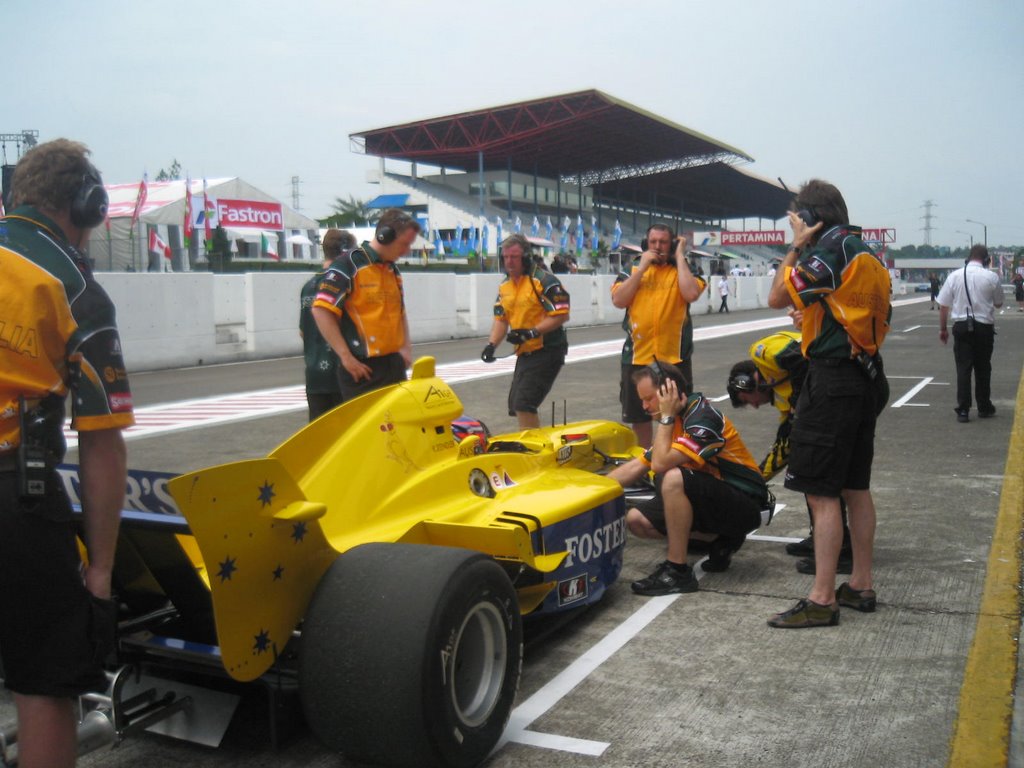
The Jakarta Post, Dec 11, 2006
The A1GP race is entering its second year and although it has yet to be as popular as the Formula One, it has started to attract more racing lovers around the globe. The Jakarta Post's Matheos Messakh spoke to A1GP Chief Operating Officer David Clare on the sidelines of Indonesia's race at Sentul circuit, south of Jakarta, over the weekend, on the challenges and the future of the sport.
Question: What are the problems the A1GP has faced?
Answer: We are very much a young series and I think our main challenge is awareness, making sure people understand what we do and aware we are different to the other series.
You talked about focusing on the Asian market. Why are you interested in the market?
The Asian market is the market that we are trying to develop. A lot of the Asian markets are fairly new in motorsports. The traditional European or North American markets are well developed.
So as a series, A1GP is in the opposite side of the other series. It makes sense and we have a lot of interest within the Asian market. So it's a very important part of our future. Also a lot of manufacturers and a lot of development in the automotive industry is around the Asian market.
Is it true that in the first year you suffered financial losses? How do you see the future of A1GP?
It's like starting any other business. At the first year, there's a lot of capital investment.
But since the end of last season, we had significant interest from major international corporations, slightly coming in. Most of them will invest in the series. They seem to approve of what we have done in the first year and we are in to the second season.
We may be able to announce initial sponsorship partnerships in the next few months.
About the sport itself, in other series you would say that technology plays maybe 75 percent of the quality of the car. But we hope here is the driver-engineer team combination that makes up the majority of the performance.
So if you have a good engineer and a driver working together closely then the car can improve significantly.
As a new championship, is the A1GP going to have one or two main established sponsors or are you looking for several different sponsors?
Currently, we're thinking of arranging global sponsors to run every car as well as a national sponsor on each car. We haven't considered having a serious type of sponsor yet. We haven't been looking to do that because we want to make sure that the brand in itself is strong.
Do you have any plans to expand the number of teams?
There is always a plan to have some more teams, maybe in the autumn. Twenty-five is a good number, 28 is probably the maximum. But if you look at most series around the world, lots of them are in 18, 20 or 22 cars. So already we are competitive within the numbers.
In the future, are you going to make A1 the final destination of top drivers?
In many situations we hope we have our own group of drivers who want to race in A1. One or two of our drivers, for example Alex Yoong of Malaysia has spent half of his carrier with A1 and he has been very supportive.
I think you'll find opportunities in certain markets. We will be the pinnacle of opportunity to certain countries.
What is your opinion about Sentul in terms of its liability for racing? Is there anything that needs to be improved?
Definitely it needs to be upgraded a little bit. Track service and things like that need to be improved. But as a venue, the location is good, it's very popular, it creates very good TV images, which is good for us and for Indonesia.
From a technological point of view, there are certain things that need to be done to the circuit. Developing awareness about the facilities, getting people to want to come here to compete themselves.
The important thing is Indonesia as a country with (a big) enough population, should be a significant player in the industry, both in the automotive side and also from the sport side.
Indonesia needs to use this (circuit) as a catalyst for the development of motorsport, not only the domestic thing but also having a major event here gives people the start to aspire to "One day I would like to drive those cars".
New Zealand's twofold win at Sentul

The Jakarta Post, Sentul, West Java
New Zealander Jonny Reid claimed his first ever double victory at the rain-disrupted A1GP race in Sentul circuit, south of Jakarta, on Sunday.
Racing from the starting grid, Reid won the feature race after clocking one hour 10 minutes and 36.607 seconds. He had earlier won the 15-lap sprint race in 19 minutes 41.054 seconds.
He had a tough race against championship leader Nico Hulkenberg of Germany, who finished second with 1:10.37.785, followed by France's Nicolas Lapierre with 1:10:40.869.
Indonesia's Ananda Mikola, who had hoped to reach the podium in front of the home crowd, finished 11th with 1:10:44.586. Ananda also failed to make a mark in the sprint race, finishing 14th in 20:07.032.
"It was not a straightforward race at all and the weather came in and played a big part in that race," Reid said in a press conference.
"After the start of the race I was struggling quite a lot and at the pit stop we made a change and the car was much, much better, as you could see in the lap times. I snatched back the lead and pushed hard to get a gap. We put a lot of push on at the end and I just got my head down," he added.
Speaking on his chances in the next race in Taupo, New Zealand, from Jan. 19-21, Reid said he has never driven there.
"I think the track will be slippery because it's a new circuit," he said.
The race was delayed for about half an hour after a heavy downpour.
Reid made an excellent start and retained his advantage over Hulkenberg to win by 1.178 seconds, his first A1GP Feature race victory.
"Fortunately I was able to take the win today. Germany and myself have shown a clear pace in qualifying for the first half of the season and I am confident we can keep that pace up," the German driver said.
The wet track caused some problems, with Great Britain's Robbie Kerr spinning out on the 38th of 47 laps. The safety car came out due to the incident.
Germany still leads the overall standings with 48 points after five races, followed by Great Britain with 36 points and Mexico with 33 points. Indonesia is tied with Ireland at the bottom with one point. (02)
New Zealander secures A1 pole
Sunday, December 10, 2006
The Jakarta Post, Jakarta
Jonny Reid of New Zealand's A1 Team snatched the pole position Saturday for Sunday's Sprint race at the Gudang Garam A1GP Sentul, with a last-gasp flying lap in the final minutes of the qualifying session.
Reid's total time was just 0.034 seconds quicker than Great Britain's Robbie Kerr, who also moved up in the last minute to secure second position from Germany's Nico Hlkenberg for Sunday's 15-lap Sprint race.
Reid performed powerfully throughout the four segments, setting top five times in all sessions, but it was his last lap that grabbed pole.
"It's quite hard in today's qualifying due to the weather conditions, but I'm glad to be on the pole position, and looking forward to the race," said Reid.
He now looks to achieve a better result in Sentul than when he competed in Brno, Czech, the last race he started on pole, where he ran into the wall before the first corner after a clash with Hlkenberg.
Meanwhile, Kerr could only post the fifth quickest in the third until a massive push in the final minute moved him into second ahead of Hlkenberg.
"It was an unfortunate situation. I think we both have misjudged the circuit corner but we have been moving on and will be focusing on winning the race tomorrow," Kerr said.
After recording the fastest time in session one, 0.064 seconds quicker than Reid, Hlkenberg looked set to score yet another pole position, however he failed to match the pace in the remaining three 15-minute portions and dropped down to third overall.
Hlkenberg said he had made minor set-up adjustments between sessions, and felt the car was better Saturday.
"Yesterday I actually had a problem, but today, I felt much better and enjoyed the track. For me the weather does not really matter. I like both, the wet and the dry conditions. I'm ready for both conditions."
Mexican Salvador Duran, after setting the fastest time in the morning's earlier practice session, steadily improved his lap times to start the race from fourth position. Duran's combined times were enough to win the position against Phil Giebler of the USA, who posted the fastest time in the third session. Defending champions France will start the race in seventh behind Australia.
Ireland's A1 Team's new racer, Richard Lyons, had an eventful first A1GP qualifying when he ran wide into a tire wall at Turn Three during the second session and caused a red flag period.
He returned to the pits to repair the car and continued in the remaining sessions to start Sunday's Sprint race from 18th on the grid.
Team Indonesia's Ananda Mikola, with an aggregate time of 2.35.519, will start from seventeenth position, after India's Armaan Ebrahim.
The Sprint race is due to start Sunday morning at 11 a.m. with the result determining the grid for the afternoon's 50-lap Feature race, which will be moved back half an hour from the original scheduled time of 3 p.m. in anticipation of rain later in the afternoon. (02)
The Jakarta Post, Jakarta
Jonny Reid of New Zealand's A1 Team snatched the pole position Saturday for Sunday's Sprint race at the Gudang Garam A1GP Sentul, with a last-gasp flying lap in the final minutes of the qualifying session.
Reid's total time was just 0.034 seconds quicker than Great Britain's Robbie Kerr, who also moved up in the last minute to secure second position from Germany's Nico Hlkenberg for Sunday's 15-lap Sprint race.
Reid performed powerfully throughout the four segments, setting top five times in all sessions, but it was his last lap that grabbed pole.
"It's quite hard in today's qualifying due to the weather conditions, but I'm glad to be on the pole position, and looking forward to the race," said Reid.
He now looks to achieve a better result in Sentul than when he competed in Brno, Czech, the last race he started on pole, where he ran into the wall before the first corner after a clash with Hlkenberg.
Meanwhile, Kerr could only post the fifth quickest in the third until a massive push in the final minute moved him into second ahead of Hlkenberg.
"It was an unfortunate situation. I think we both have misjudged the circuit corner but we have been moving on and will be focusing on winning the race tomorrow," Kerr said.
After recording the fastest time in session one, 0.064 seconds quicker than Reid, Hlkenberg looked set to score yet another pole position, however he failed to match the pace in the remaining three 15-minute portions and dropped down to third overall.
Hlkenberg said he had made minor set-up adjustments between sessions, and felt the car was better Saturday.
"Yesterday I actually had a problem, but today, I felt much better and enjoyed the track. For me the weather does not really matter. I like both, the wet and the dry conditions. I'm ready for both conditions."
Mexican Salvador Duran, after setting the fastest time in the morning's earlier practice session, steadily improved his lap times to start the race from fourth position. Duran's combined times were enough to win the position against Phil Giebler of the USA, who posted the fastest time in the third session. Defending champions France will start the race in seventh behind Australia.
Ireland's A1 Team's new racer, Richard Lyons, had an eventful first A1GP qualifying when he ran wide into a tire wall at Turn Three during the second session and caused a red flag period.
He returned to the pits to repair the car and continued in the remaining sessions to start Sunday's Sprint race from 18th on the grid.
Team Indonesia's Ananda Mikola, with an aggregate time of 2.35.519, will start from seventeenth position, after India's Armaan Ebrahim.
The Sprint race is due to start Sunday morning at 11 a.m. with the result determining the grid for the afternoon's 50-lap Feature race, which will be moved back half an hour from the original scheduled time of 3 p.m. in anticipation of rain later in the afternoon. (02)
Ananda wants more than just points in A1 race

Friday, December 08, 2006
The Jakarta Post, Lido, West Java
Weather conditions and quick newcomers are threatening Indonesian driver Ananda Mikola's ambition to reach the podium during the A1 Grand Prix races at the Sentul circuit, south of Jakarta, this weekend.
"I know the circuit better... but it's easy to make a mistake when you push too hard. We set some good lap times here last season so I know I can be up there," Ananda said Thursday.
"Hopefully the spectators will help us. I want to be on the podium, even though the team only expects me to get points."
So far, Indonesia has collected one point from four races and is at the bottom of the standings.
A huge crowd, similar to last season's audience in February, is expected to attend this weekend's extravaganza.
"I hope we will have very good attendance this year because we are better prepared. We have worked closely with the Indonesian government and the organizers to ensure the spectators have more enjoyable experience. Yes, it's a last-minute preparation but more people are aware of this event than last season's," said David Clare, A1GP chief operating officer.
Drivers are facing competition from quick newcomers at the A1GP.
"There are four or five new young stars appearing in the A1 this year. I'm sure more will appear in the future and I think that will be a challenge to established drivers, like Ananda," Clare said.
Malaysian driver Alex Yoong, who won the A1GP Sentul leg in February, said all drivers, including Ananda, would have an equal chance to win.
"He had the toughest time this year, but in Europe last season he was as quick as anybody else. He just needs to stay up for the whole weekend," Yoong said.
"I'm expecting an exciting race here and hopefully we can do as good as what we did here last season."
Malaysia is currently third on the leaderboard with 24 points after Germany, backed by Nico Hulkenberg, with 37 points and Great Britain with 31 points.
One of the newcomers, Ho-Pin Tung of China is hoping for a quick debut.
"Maybe I will suffer a bit. I'm not familiar with the car and the track and I have no experience at all in the race," he said.
Ho-Ping Tung is the newly crowned 2006 German Formula 3 Champion and comes to Sentul after testing a World Series Renault car at the Valencia track in Spain for the Belgian KTR team.
The weekend's action kicks off Friday with a practice session, followed with qualifications rounds on Saturday and the sprint and feature races on Sunday.
President Susilo Bambang Yudhoyono is scheduled to officially open the event. (02)
Monday, December 04, 2006
Foundation grooming Indonesian Einsteins
Monday, December 04, 2006
The Jakarta Post, Jakarta
Inspired by the achievement of its students in international science and math competitions over the past 10 years, a school foundation has launched a special class for gifted high school students for the next academic year.
BPK Penabur, in collaboration with the Surya Institute, will open what is dubbed the Brilliant Class with a specially designed three-year curriculum, with a focus on the sciences and maths at high school, under-graduate and graduate levels.
"From my experience with students who have won prizes in the physics Olympiad, it only takes one year for them to master the materials at the bachelor and master's level. Why should we slow them down?" said Yohanes Surya, the chairman of Surya Institute.
The class, which will be conducted at Gading Serpong Christian High School in Tangerang, only admits students with an IQ of 150 or above, who are well above average or categorized as a genius. The selection of students will start in January 2007.
"About one in every 1,000 people has an IQ of 150 or above and about one in every 11,000 people has an IQ of 160, which is the level of Einstein. It means that Indonesia with its huge population has about 25,000 Einsteins," said Yohanes who is also the chairman of the Indonesian Physics Olympiad Foundation (TOFI).
Yohanes, who used to work with the U.S. Nuclear Physics Center in Virginia, said Indonesia had been left behind in the field of science because the government had not made the most of its people's talents and had not set up the basic conditions that would encourage its scientists to come home after studying abroad.
The class, that aims to prepare students to study in high ranking universities in the U.S., will be taught by a group of experienced university lecturers using a special curriculum focusing on mathematics, physics, biology and chemistry, developed by the Surya Institute.
Yohanes, who met President George W. Bush during his recent visit in Bogor, said the president had endorsed his idea of expanding quotas for outstanding students from Indonesia in American universities.
A total of Rp 2.2 billion (US$241,700) a year is needed for the program while the education of a student costs Rp 100 million annually.
BPK Penabur, which was established 56 years ago, has 120 schools in Jakarta, West Java and Lampung provinces. Some of its students have excelled in national and international science and mathematics competitions. On such student is Jonathan Mailoa who won a gold medal at the International Physics Olympiad in Singapore last year.
Surya Institute established a "super-class" at State High School No.3 in Setiabudi, South Jakarta, in September 2005 in collaboration with the Jakarta Secondary Education Agency, the TOFI and car maker BMW Indonesia.
The institute has also received several applications for a similar project from several other schools including Al Maarif High School in Surabaya.
By working together with more and more school institutions, the Surya Institute hopes to reach its target of sending 200 brilliant students to study at top U.S. universities every year.
"From the financial point of view, this is a high-cost project, but in the long run we hope we can contribute a lot to the human capital in this country," said Yohanes. (02)
The Jakarta Post, Jakarta
Inspired by the achievement of its students in international science and math competitions over the past 10 years, a school foundation has launched a special class for gifted high school students for the next academic year.
BPK Penabur, in collaboration with the Surya Institute, will open what is dubbed the Brilliant Class with a specially designed three-year curriculum, with a focus on the sciences and maths at high school, under-graduate and graduate levels.
"From my experience with students who have won prizes in the physics Olympiad, it only takes one year for them to master the materials at the bachelor and master's level. Why should we slow them down?" said Yohanes Surya, the chairman of Surya Institute.
The class, which will be conducted at Gading Serpong Christian High School in Tangerang, only admits students with an IQ of 150 or above, who are well above average or categorized as a genius. The selection of students will start in January 2007.
"About one in every 1,000 people has an IQ of 150 or above and about one in every 11,000 people has an IQ of 160, which is the level of Einstein. It means that Indonesia with its huge population has about 25,000 Einsteins," said Yohanes who is also the chairman of the Indonesian Physics Olympiad Foundation (TOFI).
Yohanes, who used to work with the U.S. Nuclear Physics Center in Virginia, said Indonesia had been left behind in the field of science because the government had not made the most of its people's talents and had not set up the basic conditions that would encourage its scientists to come home after studying abroad.
The class, that aims to prepare students to study in high ranking universities in the U.S., will be taught by a group of experienced university lecturers using a special curriculum focusing on mathematics, physics, biology and chemistry, developed by the Surya Institute.
Yohanes, who met President George W. Bush during his recent visit in Bogor, said the president had endorsed his idea of expanding quotas for outstanding students from Indonesia in American universities.
A total of Rp 2.2 billion (US$241,700) a year is needed for the program while the education of a student costs Rp 100 million annually.
BPK Penabur, which was established 56 years ago, has 120 schools in Jakarta, West Java and Lampung provinces. Some of its students have excelled in national and international science and mathematics competitions. On such student is Jonathan Mailoa who won a gold medal at the International Physics Olympiad in Singapore last year.
Surya Institute established a "super-class" at State High School No.3 in Setiabudi, South Jakarta, in September 2005 in collaboration with the Jakarta Secondary Education Agency, the TOFI and car maker BMW Indonesia.
The institute has also received several applications for a similar project from several other schools including Al Maarif High School in Surabaya.
By working together with more and more school institutions, the Surya Institute hopes to reach its target of sending 200 brilliant students to study at top U.S. universities every year.
"From the financial point of view, this is a high-cost project, but in the long run we hope we can contribute a lot to the human capital in this country," said Yohanes. (02)
Friday, December 01, 2006
KKP RI-Timor Leste Terbentuk
Deutsche Welle 1, Agustus 2005
Indonesia dan Timor Leste serentak mengumumkan nama 10 anggota Komisi Kebenaran dan Persahabatan, KKP.
Secara serentak, pemerintah Indonesia dan Timor Leste Senin kemarin mengumumkan susunan anggota Komisi Kebenaran dan Persahabatan, KKP, yang resmi terbentuk dan mulai bertugas 1 Agustus 2005. Dalam Keterangan Pers yang dikeluarkan Kementerian Luar Negeri di Jakarta disebutkan, Indonesia akan diwakili oleh 5 anggota, dan Timor Leste juga oleh 5 anggota komisi. Anggota dari Indonesia adalah Ahmad Ali, Wisber Loeis, Benjamin Mangkudilaga, Petrus Turang dan Agus Widjojo. Sedangkan anggota komisi dari Timor Leste adalah Jacinto Alves, Diorinicio Babo, Aniceto Guterres, Felicidade Guterres dan Cirilio Varadles.
Rekomendasi Kejadian di Timor Leste
Kepada wartawan, Juru Bicara Departemen Luar Negeri, Yuri Thamrin mengatakan, para anggota komisi adalah tokoh-tokoh masyarakat yang tidak diragukan lagi kemampuannya dalam menyelesaikan konflik di kedua belah pihak. Yuri mengatakan, KKP nantinya akan mengeluarkan sebuah rekomendasi bagi kedua belah pihak mengenai apa yang sesungguhnya terjadi di Timor Leste tahun 1999. Tapi KKP tidak akan menyebut siapa saja yang bertanggungjawab atas peristiwa pasca jajak pendapat di Timor Leste, juga tidak akan menyebut nama yang sebaiknya diajukan ke persidangan. KKP hanya akan melengkapi laporan Komisi Pencari Fakta yang sudah dibuat sebelumnya, demikian Yuri Thamrin.
Tanggapan Terbentuknya KKP
Banyak pengamat menilai, komisi ini sebenarnya tidak berarti apa-apa dalam upaya mengungkapkan apa yang sebenarnya terjadi selama aksi bumi hangus di Timor-Timur tahun 1999. Mattheos Messakh, seorang jurnalis yang cukup lama mengikuti kasus ini menerangkan, KKP sebenarnya tidak punya mandat apa-apa.
Matheos Messakh: „Komisi ini tidak melakukan investigasi sendiri, mereka hanya memeriksa berkas-berkas dari komisi sebelumnya. Sedangkan komisi ini bisa memberikan amnesti kepada pelaku, walaupun mereka tidak melakukan pengusutan sendiri. Jadi, akhirnya komisi ini hanya akan memberi amnesti kepada para pelaku pelanggaran hak asasi manusia, yang membunuh dan melakukan perusakan. Ini mungkin bukan maksud sebenarnya, tapi ini yang akan dihasilkan, kalau kita lihat mandatnya.
Tapi jurubicara Kementerian Luar Negeri Yuri Thamrin kepada Deutsche Welle menjelaskan, komisi ini tidak dimaksudkan untuk menutup-nutupi masa lalu.
Yuri Thamrin: „Komisi ini akan bekerja dengan kredibel, komisi ini tidak dimaksudkan untuk menutup-nutupi masa lalu. Komisi ini tentu akan bekerja dalam sorotan banyak pihak, tidak hanya masyarakat internasional tapi juga di dalam negeri.“
Gereja Katolik di Timor Leste juga mengeritik pembentukan Komisi Kebenaran dan Persahabatan. Para uskup di Timor Leste menegaskan, para pemimpin politik telah menyangkal hak rakyat Timor Leste untuk meraih keadilan. Gereja Katolik Timor Leste menuntut PBB untuk membentuk pengadilan internasional. Hanya dengan jalan itu, keadilan bagi para korban pelanggaran HAM pada masa jajak pendapat bisa diraih, demikian disebutkan. Juga Selandia Baru menuntut adanya ‚pengadilan yang kredibel’ bagi para pelanggar HAM di Timor Timur. (hp)
Indonesia dan Timor Leste serentak mengumumkan nama 10 anggota Komisi Kebenaran dan Persahabatan, KKP.
Secara serentak, pemerintah Indonesia dan Timor Leste Senin kemarin mengumumkan susunan anggota Komisi Kebenaran dan Persahabatan, KKP, yang resmi terbentuk dan mulai bertugas 1 Agustus 2005. Dalam Keterangan Pers yang dikeluarkan Kementerian Luar Negeri di Jakarta disebutkan, Indonesia akan diwakili oleh 5 anggota, dan Timor Leste juga oleh 5 anggota komisi. Anggota dari Indonesia adalah Ahmad Ali, Wisber Loeis, Benjamin Mangkudilaga, Petrus Turang dan Agus Widjojo. Sedangkan anggota komisi dari Timor Leste adalah Jacinto Alves, Diorinicio Babo, Aniceto Guterres, Felicidade Guterres dan Cirilio Varadles.
Rekomendasi Kejadian di Timor Leste
Kepada wartawan, Juru Bicara Departemen Luar Negeri, Yuri Thamrin mengatakan, para anggota komisi adalah tokoh-tokoh masyarakat yang tidak diragukan lagi kemampuannya dalam menyelesaikan konflik di kedua belah pihak. Yuri mengatakan, KKP nantinya akan mengeluarkan sebuah rekomendasi bagi kedua belah pihak mengenai apa yang sesungguhnya terjadi di Timor Leste tahun 1999. Tapi KKP tidak akan menyebut siapa saja yang bertanggungjawab atas peristiwa pasca jajak pendapat di Timor Leste, juga tidak akan menyebut nama yang sebaiknya diajukan ke persidangan. KKP hanya akan melengkapi laporan Komisi Pencari Fakta yang sudah dibuat sebelumnya, demikian Yuri Thamrin.
Tanggapan Terbentuknya KKP
Banyak pengamat menilai, komisi ini sebenarnya tidak berarti apa-apa dalam upaya mengungkapkan apa yang sebenarnya terjadi selama aksi bumi hangus di Timor-Timur tahun 1999. Mattheos Messakh, seorang jurnalis yang cukup lama mengikuti kasus ini menerangkan, KKP sebenarnya tidak punya mandat apa-apa.
Matheos Messakh: „Komisi ini tidak melakukan investigasi sendiri, mereka hanya memeriksa berkas-berkas dari komisi sebelumnya. Sedangkan komisi ini bisa memberikan amnesti kepada pelaku, walaupun mereka tidak melakukan pengusutan sendiri. Jadi, akhirnya komisi ini hanya akan memberi amnesti kepada para pelaku pelanggaran hak asasi manusia, yang membunuh dan melakukan perusakan. Ini mungkin bukan maksud sebenarnya, tapi ini yang akan dihasilkan, kalau kita lihat mandatnya.
Tapi jurubicara Kementerian Luar Negeri Yuri Thamrin kepada Deutsche Welle menjelaskan, komisi ini tidak dimaksudkan untuk menutup-nutupi masa lalu.
Yuri Thamrin: „Komisi ini akan bekerja dengan kredibel, komisi ini tidak dimaksudkan untuk menutup-nutupi masa lalu. Komisi ini tentu akan bekerja dalam sorotan banyak pihak, tidak hanya masyarakat internasional tapi juga di dalam negeri.“
Gereja Katolik di Timor Leste juga mengeritik pembentukan Komisi Kebenaran dan Persahabatan. Para uskup di Timor Leste menegaskan, para pemimpin politik telah menyangkal hak rakyat Timor Leste untuk meraih keadilan. Gereja Katolik Timor Leste menuntut PBB untuk membentuk pengadilan internasional. Hanya dengan jalan itu, keadilan bagi para korban pelanggaran HAM pada masa jajak pendapat bisa diraih, demikian disebutkan. Juga Selandia Baru menuntut adanya ‚pengadilan yang kredibel’ bagi para pelanggar HAM di Timor Timur. (hp)

Sifon; Persepsi tentang Kekuatan Seks
Jawa Pos, Rabu, 5 April 2006
Bagi kaum laki-laki, sunat adalah hal yang wajar, bahkan malah jadi suatu keharusan. Lalu, ada tradisi yang mengharuskan laki-laki setelah sunat berhubungan intim dengan minimal tiga perempuan yang berbeda secara bertahap. Namanya sifon. Bagaimana prosesi sifon itu?
Tradisi merupakan suatu hal unik yang memperkaya keanekaragaman budaya. Bentuk dan jenis tradisi itu bisa berupa apa saja. Salah satunya adalah sifon. Sifon tak berbeda dengan mitos-mitos lain yang berhubungan dengan fungsi seksual pria. Tradisi tersebut masih banyak dilakukan di Nusa Tenggara Timur. Karena dipercayai berkaitan erat dengan keperkasaan, kejantanan, dan keharmonisan keluarga, tradisi sifon dipegang sangat kuat, baik oleh laki-laki maupun perempuan yang menjadi mitra seksualnya.
Karena itu, banyak perempuan lajang yang mengharuskan calon suaminya disifon sebelum menikah. Banyak pula istri yang mendorong suaminya yang belum disifon untuk menjalani sifon.
Sering laki-laki yang tidak atau belum disifon akan diolok-olok atau disindir, biasanya dilakukan dalam pertemuan-pertemuan komunal. Tetapi, bagaimana sebenarnya tradisi itu dilakukan?
Sifon biasanya dilakukan bertahap dan masing-masing tahap mempunyai makna berbeda-beda. Sebelum melakukan sunat dan sifon, ada tahapan yang disebut naketi, yaitu pengakuan kepada dukun sunat tentang berapa kali seorang laki-laki pernah berhubungan seks sebelum disunat.
Seberapa banyak seorang laki-laki pernah berhubungan seks akan disimbolkan dengan sejumah batu yang dikumpulkan untuk diberikan kepada dukun sunat. Bila terlalu sering berhubungan seks, biasanya cukup disimbolkan dengan batu besar.
Tahap pertama, bertujuan membuang panas, maksudnya adalah membuang bala atau penyakit. Bila tidak menempuh tahap ini, dipercaya akan terjadi musibah. Misalnya, terjangkit penyakit, rumah tangga tidak harmonis, dan anak-anak mudah terserang penyakit.
Caranya adalah dengan melakukan hubungan seks dengan perempuan tua yang sudah berumur atau dengan perempuan yang sudah memiliki banyak anak. Prosesi pembuangan panas itu dilakukan ketika kondisi luka sunat hampir sembuh, yaitu 4-8 hari setelah disunat. Dia harus berhubungan seks untuk memecahkan bengkak luka sunat.
Tahap kedua disebut saeb aof atau menaikkan badan. Pada tahap ini, hubungan seks dipercaya dapat mengembalikan kesegaran tubuh atau mengembalikan darah yang terbuang pada saat sunat. Pada tahap ini, pelaku sifon dianjurkan berhubungan seks dengan perempuan muda atau yang masih lajang.
Selanjutnya adalah tahap ha’ekit atau tahap melicinkan dan menghaluskan. Dalam tahap ini, pelaku tradisi itu percaya bahwa hubungan seks dapat menghaluskan luka-luka atau gelambir luka pada alat kelamin setelah disunat.
Rentan Penyakit Menular
Bila ditelaah lebih lanjut, sebenarnya praktik sunat yang diikuti sifon sangatlah membuka peluang bagi penularan penyakit menular seksual (PMS), terutama bagi perempuan.
Kerentanan perempuan terhadap PMS sebagai praktik sifon itu disebabkan pada umumnya laki-laki yang menjalani sunat telah lebih dari satu kali berhubungan seks dengan perempuan yang sudah terbiasa melakukan hubungan seks (PSK). Apalagi hubungan seksual itu dilakukan ketika alat kelamin dalam keadaan luka atau infeksi sehingga pelaku tradisi tersebut berpotensi terjangkit penyakit menular seksual.
Anggapan yang muncul di masyarakat wilayah itu -sunat dan sifon dapat meningkatkan daya seksual laki-laki- semakin menyuburkan praktik sifon sekaligus mempunyai daya paksa bagi laki-laki untuk melakukannya. Akibatnya, posisi daya tawar perempuan menjadi lemah.
Hal itu memunculkan dominasi kuasa laki-laki yang menempatkan perempuan pada posisi tidak berdaya dan tidak berani menolak tuntutan tradisi sifon. Padahal, selain penularan PMS, perempuan rentan terhadap tindakan diskriminatif dan kekerasan. Tetapi ironisnya, perempuan sendiri menerima hegemoni nilai di balik sifon sebagai sebuah tradisi yang wajib dan tidak bisa ditolak.
Itulah fenomena menarik tradisi sifon yang menggelitik hati seorang Ferderika Tadu Hungu untuk melakukan penelitian ini.
Metode pengumpulan data dilakukan Tadu melalui wawancara mendalam dan FGD (focus group discussion). Informan penelitian dipilih secara snowball terhadap 42 orang perempuan yang berstatus sebagai istri.
Sasaran penelitian Tadu itu dibagi atas empat kelompok, yaitu perempuan yang suaminya belum disifon, perempuan yang menikah dengan laki-laki yang telah sifon sebelum menikah, perempuan yang menikah dengan laki-laki yang melakukan sifon setelah menikah, dan perempuan yang melayani sifon.
Dalam proses pengumpulan data, Tadu dibantu beberapa perempuan lokal. Namun dalam perkembangannya, mereka keberatan karena masalah-masalah seksual masih dianggap tabu selain ada beban psikologis sebagai sesama warga. Juga, saat wawancara, para informan biasanya dikelilingi suami atau saudara laki-laki mereka. Jalan keluarnya, Tadu melakukan pendekatan kepada informan tatkala suami-suami mereka tidak berada di rumah.
Maskulinitas dalam Tradisi Sifon
Dalam praktik sifon itu, peranan dukun sunat cukuplah dominan. Dukun menjadi sarana penyebar informasi mengenai sunat dan sifon. Pada umumnya, dukun sunat adalah orang yang mempunyai pengaruh dan posisi yang dihormati dalam masyarakat atau gereja.
Selain itu, dukun sunat pandai sekali membaca wajah laki-laki yang sudah disunat dan laki-laki yang belum disunat. Mereka mengatakan bahwa laki-laki yang sudah disunat dan melakukan sifon akan terlihat bercahaya, segar, dan mempunyai fisik yang kuat.
Hampir semua informan dalam penelitian ini menyatakan, sifon membuat hubungan seks dengan suami lebih memuaskan karena lebih lama ejakulasinya. Begitu pula sebaliknya, laki-laki yang ejakulasi dini dianggap egois karena tidak dapat memuskan istri dan hanya untuk kepuasan sendiri.
Menurut mereka, hal itu terjadi bukan karena tidak ada kerja sama antara suami-istri untuk kenikmatan seksual, tetapi akibat gesekan dari kulit alat kelamin suami yang mengakibatkan ejakulasi dini.
"…jika berhubungan dengan istrinya, itu akan membuat istrinya puas dan kelihatan cantik," ujar Yu, salah seorang informan.
Pernyataan tersebut menunjukkan bahwa sifon bisa membuat laki-laki kuat dan perkasa dalam hubungan seksual. Di samping itu, semakin sering seorang laki-laki melakukan hubungan seks, mereka dianggap semakin gagah.
Mereka mengangap laki-laki yang impoten bukanlah laki-laki sejati. Sebab, kejantanan dianggap melambangkan kehidupan laki-laki sehingga jika tak lagi berfungsi, orang itu tak berguna lagi dan disamakan dengan perempuan atau banci. Hal tersebut dipengaruhi kepercayaan bahwa laki-laki yang disunat tanpa sifon akan mengalami impotensi.
Meski demikian, lima orang informan menyatakan cukup menikmati hubungan seks tanpa mempermasalahkan suami sifon atau tidak. Temuan menarik lainnya dalam penelitian ini adalah kesediaan dan kesetujuan kaum ibu jika anak laki-lakinya menjalani sifon. Namun, mereka tidak mau j anak perempuannya menjadi sasaran sifon. Mereka jelas-jelas tidak mau nama keluarga tercemar serta agar anak perempuannya tidak mendapatkan penyakit kotor akibat menjadi tempat "buang panas". (yg/ryn)
Bagi kaum laki-laki, sunat adalah hal yang wajar, bahkan malah jadi suatu keharusan. Lalu, ada tradisi yang mengharuskan laki-laki setelah sunat berhubungan intim dengan minimal tiga perempuan yang berbeda secara bertahap. Namanya sifon. Bagaimana prosesi sifon itu?
Tradisi merupakan suatu hal unik yang memperkaya keanekaragaman budaya. Bentuk dan jenis tradisi itu bisa berupa apa saja. Salah satunya adalah sifon. Sifon tak berbeda dengan mitos-mitos lain yang berhubungan dengan fungsi seksual pria. Tradisi tersebut masih banyak dilakukan di Nusa Tenggara Timur. Karena dipercayai berkaitan erat dengan keperkasaan, kejantanan, dan keharmonisan keluarga, tradisi sifon dipegang sangat kuat, baik oleh laki-laki maupun perempuan yang menjadi mitra seksualnya.
Karena itu, banyak perempuan lajang yang mengharuskan calon suaminya disifon sebelum menikah. Banyak pula istri yang mendorong suaminya yang belum disifon untuk menjalani sifon.
Sering laki-laki yang tidak atau belum disifon akan diolok-olok atau disindir, biasanya dilakukan dalam pertemuan-pertemuan komunal. Tetapi, bagaimana sebenarnya tradisi itu dilakukan?
Sifon biasanya dilakukan bertahap dan masing-masing tahap mempunyai makna berbeda-beda. Sebelum melakukan sunat dan sifon, ada tahapan yang disebut naketi, yaitu pengakuan kepada dukun sunat tentang berapa kali seorang laki-laki pernah berhubungan seks sebelum disunat.
Seberapa banyak seorang laki-laki pernah berhubungan seks akan disimbolkan dengan sejumah batu yang dikumpulkan untuk diberikan kepada dukun sunat. Bila terlalu sering berhubungan seks, biasanya cukup disimbolkan dengan batu besar.
Tahap pertama, bertujuan membuang panas, maksudnya adalah membuang bala atau penyakit. Bila tidak menempuh tahap ini, dipercaya akan terjadi musibah. Misalnya, terjangkit penyakit, rumah tangga tidak harmonis, dan anak-anak mudah terserang penyakit.
Caranya adalah dengan melakukan hubungan seks dengan perempuan tua yang sudah berumur atau dengan perempuan yang sudah memiliki banyak anak. Prosesi pembuangan panas itu dilakukan ketika kondisi luka sunat hampir sembuh, yaitu 4-8 hari setelah disunat. Dia harus berhubungan seks untuk memecahkan bengkak luka sunat.
Tahap kedua disebut saeb aof atau menaikkan badan. Pada tahap ini, hubungan seks dipercaya dapat mengembalikan kesegaran tubuh atau mengembalikan darah yang terbuang pada saat sunat. Pada tahap ini, pelaku sifon dianjurkan berhubungan seks dengan perempuan muda atau yang masih lajang.
Selanjutnya adalah tahap ha’ekit atau tahap melicinkan dan menghaluskan. Dalam tahap ini, pelaku tradisi itu percaya bahwa hubungan seks dapat menghaluskan luka-luka atau gelambir luka pada alat kelamin setelah disunat.
Rentan Penyakit Menular
Bila ditelaah lebih lanjut, sebenarnya praktik sunat yang diikuti sifon sangatlah membuka peluang bagi penularan penyakit menular seksual (PMS), terutama bagi perempuan.
Kerentanan perempuan terhadap PMS sebagai praktik sifon itu disebabkan pada umumnya laki-laki yang menjalani sunat telah lebih dari satu kali berhubungan seks dengan perempuan yang sudah terbiasa melakukan hubungan seks (PSK). Apalagi hubungan seksual itu dilakukan ketika alat kelamin dalam keadaan luka atau infeksi sehingga pelaku tradisi tersebut berpotensi terjangkit penyakit menular seksual.
Anggapan yang muncul di masyarakat wilayah itu -sunat dan sifon dapat meningkatkan daya seksual laki-laki- semakin menyuburkan praktik sifon sekaligus mempunyai daya paksa bagi laki-laki untuk melakukannya. Akibatnya, posisi daya tawar perempuan menjadi lemah.
Hal itu memunculkan dominasi kuasa laki-laki yang menempatkan perempuan pada posisi tidak berdaya dan tidak berani menolak tuntutan tradisi sifon. Padahal, selain penularan PMS, perempuan rentan terhadap tindakan diskriminatif dan kekerasan. Tetapi ironisnya, perempuan sendiri menerima hegemoni nilai di balik sifon sebagai sebuah tradisi yang wajib dan tidak bisa ditolak.
Itulah fenomena menarik tradisi sifon yang menggelitik hati seorang Ferderika Tadu Hungu untuk melakukan penelitian ini.
Metode pengumpulan data dilakukan Tadu melalui wawancara mendalam dan FGD (focus group discussion). Informan penelitian dipilih secara snowball terhadap 42 orang perempuan yang berstatus sebagai istri.
Sasaran penelitian Tadu itu dibagi atas empat kelompok, yaitu perempuan yang suaminya belum disifon, perempuan yang menikah dengan laki-laki yang telah sifon sebelum menikah, perempuan yang menikah dengan laki-laki yang melakukan sifon setelah menikah, dan perempuan yang melayani sifon.
Dalam proses pengumpulan data, Tadu dibantu beberapa perempuan lokal. Namun dalam perkembangannya, mereka keberatan karena masalah-masalah seksual masih dianggap tabu selain ada beban psikologis sebagai sesama warga. Juga, saat wawancara, para informan biasanya dikelilingi suami atau saudara laki-laki mereka. Jalan keluarnya, Tadu melakukan pendekatan kepada informan tatkala suami-suami mereka tidak berada di rumah.
Maskulinitas dalam Tradisi Sifon
Dalam praktik sifon itu, peranan dukun sunat cukuplah dominan. Dukun menjadi sarana penyebar informasi mengenai sunat dan sifon. Pada umumnya, dukun sunat adalah orang yang mempunyai pengaruh dan posisi yang dihormati dalam masyarakat atau gereja.
Selain itu, dukun sunat pandai sekali membaca wajah laki-laki yang sudah disunat dan laki-laki yang belum disunat. Mereka mengatakan bahwa laki-laki yang sudah disunat dan melakukan sifon akan terlihat bercahaya, segar, dan mempunyai fisik yang kuat.
Hampir semua informan dalam penelitian ini menyatakan, sifon membuat hubungan seks dengan suami lebih memuaskan karena lebih lama ejakulasinya. Begitu pula sebaliknya, laki-laki yang ejakulasi dini dianggap egois karena tidak dapat memuskan istri dan hanya untuk kepuasan sendiri.
Menurut mereka, hal itu terjadi bukan karena tidak ada kerja sama antara suami-istri untuk kenikmatan seksual, tetapi akibat gesekan dari kulit alat kelamin suami yang mengakibatkan ejakulasi dini.
"…jika berhubungan dengan istrinya, itu akan membuat istrinya puas dan kelihatan cantik," ujar Yu, salah seorang informan.
Pernyataan tersebut menunjukkan bahwa sifon bisa membuat laki-laki kuat dan perkasa dalam hubungan seksual. Di samping itu, semakin sering seorang laki-laki melakukan hubungan seks, mereka dianggap semakin gagah.
Mereka mengangap laki-laki yang impoten bukanlah laki-laki sejati. Sebab, kejantanan dianggap melambangkan kehidupan laki-laki sehingga jika tak lagi berfungsi, orang itu tak berguna lagi dan disamakan dengan perempuan atau banci. Hal tersebut dipengaruhi kepercayaan bahwa laki-laki yang disunat tanpa sifon akan mengalami impotensi.
Meski demikian, lima orang informan menyatakan cukup menikmati hubungan seks tanpa mempermasalahkan suami sifon atau tidak. Temuan menarik lainnya dalam penelitian ini adalah kesediaan dan kesetujuan kaum ibu jika anak laki-lakinya menjalani sifon. Namun, mereka tidak mau j anak perempuannya menjadi sasaran sifon. Mereka jelas-jelas tidak mau nama keluarga tercemar serta agar anak perempuannya tidak mendapatkan penyakit kotor akibat menjadi tempat "buang panas". (yg/ryn)
Students' designs win national awards for future bicycle
Thursday, November 30, 2006
The Jakarta Post, Jakarta
Three students from a state high school in Denpasar are happy enough to have won the first and second prizes in a national bicycle design competition, but are unconvinced their works will ever see daylight.
"We are happy of course, but from our past experience we are afraid that these designs will never become real products because there is no financial support," said Gana Sudibya, who also once won second prize in the high school student category at a national electronics design competition.
On Saturday Gana, Budi Riyanta and Aditheya Indra from Denpasar took first and second prize in the high school student category of the bicycle competition, while Rinata Permana, Roghib Hujja and Didik Rahmawan from Purwokerto won third prize.
In the university student and public category, Doni Luwantoro, a Surabaya-based designer, won first prize, while Pandu Purwandaru, a student at the Bandung Institute of Technology and Aris Indarto, a student at Gajah Mada University won second and third prize respectively.
The competition, which opened in June, was held by Pancasila University in collaboration with the United Bike manufacturing company, the National Center for Design and the Directorate General of Intellectual Property Rights.
The judging committee received more than 80 entries from 12 provinces, which by the end of September had been whittled down to a shortlist of 30.
A final evaluation by the panel of four judges took into account each design's creativity, marketability, and aesthetic aspects, in addition to innovation relating to its mechanical components, structure and performance.
Eleven finalists gathered Friday in the hall of the department of technology at Pancasila University for the final evaluation.
Gana, Budi and Aditheya said they got the ideas for their "G-2, smart technology for healthy life" and "grasshopper" designs from characters in a children's movie about insects. They took home a total of Rp 2.5 million (US$228), two trophies and two bicycles.
"These are really imaginative ideas, if we don't want to call them crazy. Can you imagine a bicycle with a computer chip or hydrocarbon power? These students are really brilliant. I think that, as high school students, they must read a lot, because some of their ideas (involve) NASA-like technology," said Edi Jatmiko a judge from Pancasila University.
"As an educator, however, we have to encourage these efforts, and it is not impossible to bring them into reality," he added.
Another judge, Janto Hasan, said most of the designs simply needed slight modifications in order to be manufactured.
"There are some designs (that currently would have) high production costs, but we only need to change some materials and to do some slight alterations to the design if we want to produce them on a large scale," he said.
Budi Darmadi, the director general of transportation and telecommunications at the Industry Ministry, said that Indonesia needed to increase its bicycle production because the national demand for bikes exceeded supply.
"The national demand is five billion a year; meanwhile we can only produce two billion a year. Moreover, about 650,000 of those produced nationally are earmarked for export," said Darmadi.
He added that he encouraged the university to rush through the intellectual property rights applications for the designs and send the prototypes to the upcoming national industrial exhibition.
Fahri Hamzah, a member of the House of Representatives' industrial commission, said he would urge his colleagues at the commission to adopt policies that were in favor of the bicycle industry.
"We hope that this competition will not merely emphasize the design but will also make applying for intellectual property rights a priority," he said.
Lahindah, a judge from the Directorate General of Intellectual Property Rights, said that the winning designs would be registered for intellectual property rights.
"The designs are may not fall into the category of originality, but are in the category of newness and industrial applicability" she said. (02)
The Jakarta Post, Jakarta
Three students from a state high school in Denpasar are happy enough to have won the first and second prizes in a national bicycle design competition, but are unconvinced their works will ever see daylight.
"We are happy of course, but from our past experience we are afraid that these designs will never become real products because there is no financial support," said Gana Sudibya, who also once won second prize in the high school student category at a national electronics design competition.
On Saturday Gana, Budi Riyanta and Aditheya Indra from Denpasar took first and second prize in the high school student category of the bicycle competition, while Rinata Permana, Roghib Hujja and Didik Rahmawan from Purwokerto won third prize.
In the university student and public category, Doni Luwantoro, a Surabaya-based designer, won first prize, while Pandu Purwandaru, a student at the Bandung Institute of Technology and Aris Indarto, a student at Gajah Mada University won second and third prize respectively.
The competition, which opened in June, was held by Pancasila University in collaboration with the United Bike manufacturing company, the National Center for Design and the Directorate General of Intellectual Property Rights.
The judging committee received more than 80 entries from 12 provinces, which by the end of September had been whittled down to a shortlist of 30.
A final evaluation by the panel of four judges took into account each design's creativity, marketability, and aesthetic aspects, in addition to innovation relating to its mechanical components, structure and performance.
Eleven finalists gathered Friday in the hall of the department of technology at Pancasila University for the final evaluation.
Gana, Budi and Aditheya said they got the ideas for their "G-2, smart technology for healthy life" and "grasshopper" designs from characters in a children's movie about insects. They took home a total of Rp 2.5 million (US$228), two trophies and two bicycles.
"These are really imaginative ideas, if we don't want to call them crazy. Can you imagine a bicycle with a computer chip or hydrocarbon power? These students are really brilliant. I think that, as high school students, they must read a lot, because some of their ideas (involve) NASA-like technology," said Edi Jatmiko a judge from Pancasila University.
"As an educator, however, we have to encourage these efforts, and it is not impossible to bring them into reality," he added.
Another judge, Janto Hasan, said most of the designs simply needed slight modifications in order to be manufactured.
"There are some designs (that currently would have) high production costs, but we only need to change some materials and to do some slight alterations to the design if we want to produce them on a large scale," he said.
Budi Darmadi, the director general of transportation and telecommunications at the Industry Ministry, said that Indonesia needed to increase its bicycle production because the national demand for bikes exceeded supply.
"The national demand is five billion a year; meanwhile we can only produce two billion a year. Moreover, about 650,000 of those produced nationally are earmarked for export," said Darmadi.
He added that he encouraged the university to rush through the intellectual property rights applications for the designs and send the prototypes to the upcoming national industrial exhibition.
Fahri Hamzah, a member of the House of Representatives' industrial commission, said he would urge his colleagues at the commission to adopt policies that were in favor of the bicycle industry.
"We hope that this competition will not merely emphasize the design but will also make applying for intellectual property rights a priority," he said.
Lahindah, a judge from the Directorate General of Intellectual Property Rights, said that the winning designs would be registered for intellectual property rights.
"The designs are may not fall into the category of originality, but are in the category of newness and industrial applicability" she said. (02)
Monday, November 27, 2006
Mengubah Dunia dengan hal-hal kecil
Langkah 1#
Jika setiap orang di negara ini menggunakan minimal 1 kantong plastik setiap harinya, berarti dalam setahun sekurang-kurangnya harus diproduksi 90 milyar (360 x 250 juta) kantong plastic untuk memenuhi kebutuhan orang Indonesia.
Sebuah kantong plastik membutuhkan waktu 500 tahun untuk membusuk di tanah. Satu hari berbelanja, berdampak sampai 500 tahun.
Ada pilihan lain. Orang menyebutnya ‘tas belanja’ yaitu menggunakan satu tas yang sama setiap kali berbelanja. Selain mengurangi dampak pada lingkungan juga modelnya stylish dan elegan.
Link
Kurangi kantong plastik sebisa mungkin
Jika setiap orang di negara ini menggunakan minimal 1 kantong plastik setiap harinya, berarti dalam setahun sekurang-kurangnya harus diproduksi 90 milyar (360 x 250 juta) kantong plastic untuk memenuhi kebutuhan orang Indonesia.
Sebuah kantong plastik membutuhkan waktu 500 tahun untuk membusuk di tanah. Satu hari berbelanja, berdampak sampai 500 tahun.
Ada pilihan lain. Orang menyebutnya ‘tas belanja’ yaitu menggunakan satu tas yang sama setiap kali berbelanja. Selain mengurangi dampak pada lingkungan juga modelnya stylish dan elegan.
Link
Subscribe to:
Posts (Atom)